
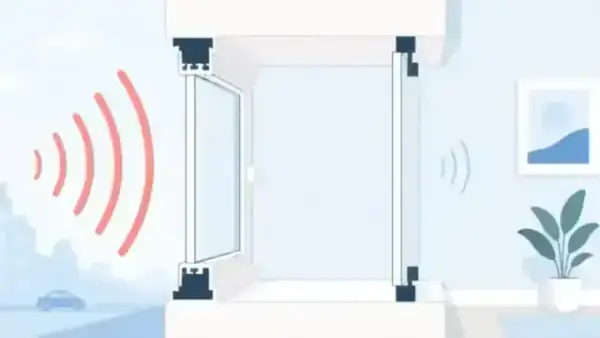
If you live on a London Red Route: one of those busy A-roads like the A2, the A40, or the North Circular: you don’t just "hear" the traffic. You feel it. It’s the low-frequency rumble of a double-decker bus idling outside your bedroom at 6:00 AM. It’s the sharp hiss of tyres on wet tarmac and the sudden, jarring wail of an ambulance siren.
You’ve probably tried everything. Heavy curtains? They might stop a draught, but they won't stop a 10-ton HGV. Traditional double glazing? It’s better than a single pane, but many homeowners are shocked to find that even brand-new double glazing often struggles to handle the relentless bass of city traffic.
There is a specific "secret" to total silence that acoustic engineers have known for decades, and it’s surprisingly simple: the 150mm cavity.
When we install secondary double glazing in London, we aren't just putting up a second bit of glass. We are creating a sophisticated "mass-air-mass" system. If you want to drop the noise levels by up to 80%, that 150mm gap (about 6 inches) is your best friend.
Here is the breakdown of why that specific distance is the "sweet spot" for reclaiming your peace and quiet.
The Problem with Modern Double Glazing
Most people assume that more glass equals less noise. But sound is a tricky beast.
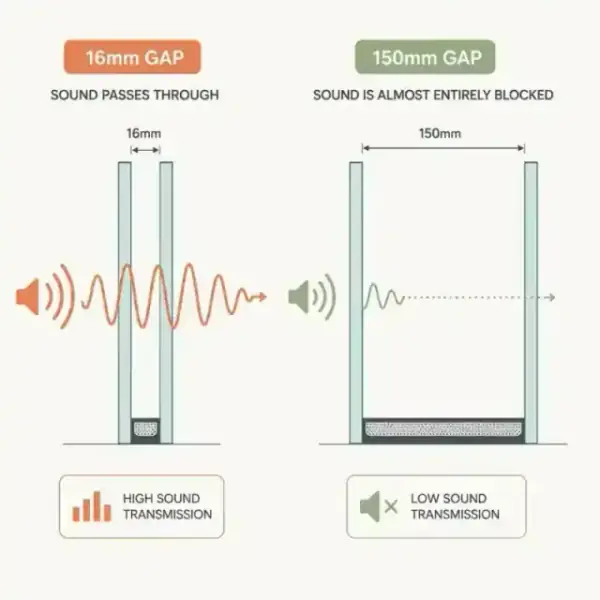
Standard double-glazed units usually have a tiny gap between the panes: often just 16mm to 20mm. While this is fantastic for keeping the heat in, it’s actually a bit of a disaster for soundproofing. Because the panes are so close together, the air between them acts like a stiff spring. When a sound wave hits the outer pane, that "spring" immediately pushes the vibration onto the inner pane.
This creates something called "resonance." At certain frequencies: the exact deep, low frequencies produced by London buses and lorries: the two panes actually vibrate together, almost as if they were a single sheet of glass.
Why 150mm is the Magic Number
The reason we recommend a 100mm to 150mm cavity is to break that "spring" effect.
When you increase the gap to 150mm, you are "decoupling" the two windows. The air space becomes large enough that it no longer acts as a stiff conductor. Instead, it becomes a buffer.
Technically speaking, this shifts the mass-air-mass resonance frequency below 80 Hz. Why does that matter to you? Because the most annoying parts of London traffic: the engine thrum and the road rumble: sit right in the 80 Hz to 500 Hz range. By pushing the resonance below 80 Hz, your window system starts working against the traffic rather than vibrating with it.
In real-world terms, while standard double glazing might give you a 25dB reduction, achieving an 80% noise reduction with secondary glazing and a proper cavity can push that reduction up to 50dB or more. It is the difference between hearing a conversation clearly through a wall and not knowing the conversation is even happening.
Meet the Heavyweight: Acoustic Laminated Glass
The cavity does the heavy lifting, but the glass you choose is the finishing blow. Standard glass is rigid. When sound hits it, it rings like a bell (on a microscopic level).
Acoustic glass, such as Stadip Silence, is different. It’s a "sandwich" made of two layers of glass with a special PVB (Polyvinyl Butyral) interlayer in the middle.
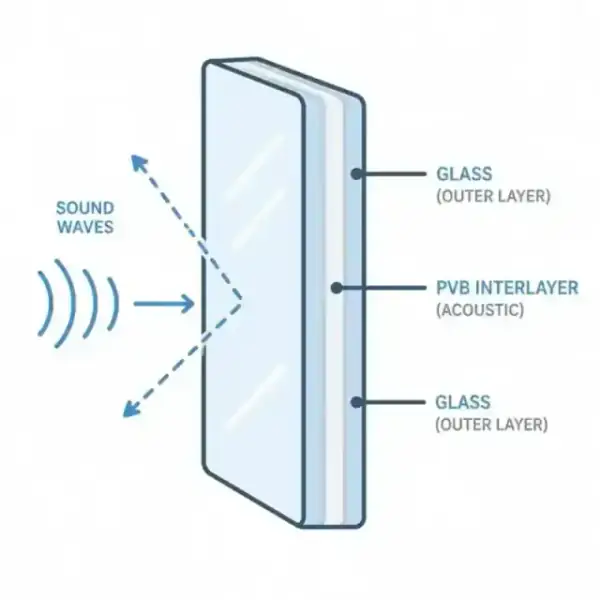
This interlayer acts like a dampener. It’s slightly soft, so when sound waves hit it, the energy is absorbed and turned into a tiny amount of heat rather than being passed through. Using a 6.4mm or 10.8mm acoustic laminate in your secondary glazing, combined with that 150mm gap, is how we transform a flat overlooking the Gherkin or a house on a Red Route into a silent sanctuary.

Can I Really Fit 150mm in My Home?
This is the question we get most often. "Six inches? That sounds like it’s going to stick halfway into my living room!"
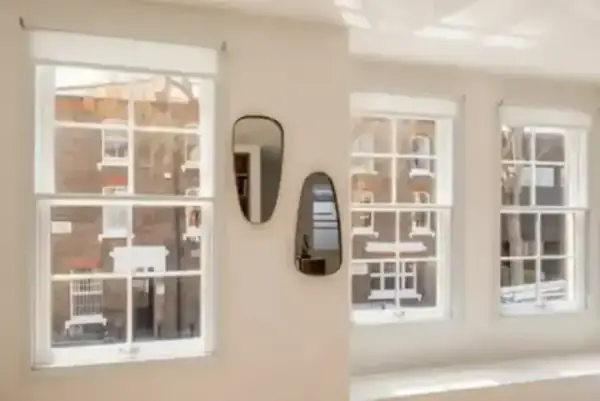
In most London period homes: especially those with sash windows: the "reveal" (the internal windowsill area) is actually quite deep. We can often fit the secondary glazing discreetly within that reveal.
The beauty of secondary glazing is that it’s bespoke. We don’t have to stick to a rigid 150mm if your space doesn't allow it. Even a 100mm gap offers a massive improvement over standard windows. We look at your specific window frames and find the maximum depth possible without eating into your living space or obstructing your shutters.
Why Not Go Even Bigger?
You might wonder, "If 150mm is great, would 300mm be silent?"
In acoustics, there’s a law of diminishing returns. Moving from 16mm to 150mm gives you a massive, life-changing jump in performance. Moving from 150mm to 200mm or 300mm gives you a tiny bit more, but at the cost of your floor space and making the windows much harder to operate.
150mm is the practical "sweet spot." It’s where you get the most "hush" for your buck.
The "Red Route" Reality Check
Living on a Red Route means your windows are under constant attack from noise. It isn't just about comfort; it's about health. Constant noise exposure is linked to higher stress levels and poorer sleep quality.
If you are currently choosing between secondary glazing vs double glazing, remember that for pure noise cancellation, secondary wins every time. It’s not because the glass is "magical," but because the physical distance: that 150mm cavity: is something a single double-glazed unit simply cannot replicate.
What Should You Look For?
If you're ready to quieten your home, here are three things to check during a survey:
- The Reveal Depth: Ask your installer exactly how much of a gap they can achieve. If they suggest anything less than 100mm for a noise problem, ask why.
- The Glass Weight: Make sure they are using genuine acoustic laminate, not just "thick glass." The interlayer is what kills the vibration.
- The Seals: A 150mm gap is useless if air can leak around the edges. Sound is like water; it will find the smallest hole. Professional installation ensures the frame is airtight.
Ready to Silence the City?
You don’t have to move house to get a good night's sleep. Whether you're in a listed building where you can't change the windows, or a modern apartment that was poorly insulated against road noise, there is a solution.
If you're tired of the buses sounding like they're in your living room, reach out to us for a chat. We’ll come over, measure your reveals, and show you exactly how we can use the 150mm secret to bring some much-needed peace back to your London home.
- * *
WhatsApp us