
Living in Kensington comes with a certain prestige: and a very specific set of challenges. Between the stunning stucco-fronted terraces and the vibrant culture, there is the reality of the Kensington "red routes." If your home overlooks roads like Kensington High Street or the Cromwell Road, you know exactly what I mean. The constant hum of black cabs, the rumble of buses every two minutes, and that distinct London chill that seems to find its way through even the sturdiest original sash windows.
Recently, we worked with a homeowner, Sarah, who lived in a beautiful second-floor Victorian flat just off a major arterial route. While she loved the character of her home: the high ceilings, the ornate cornicing, and those iconic floor-to-ceiling windows: the noise and the drafts had become unbearable.
"It felt like the buses were driving through my living room," she told us. "And in the winter, I had to wear a woolly jumper just to sit on the sofa because of the drafts coming off the glass."
Sarah’s situation is the perfect example of why secondary glazing in London is more than just a home improvement; for many, it’s a necessity for reclaiming their peace of mind.
The Challenge: Noise, Conservation, and the "Red Route" Reality
The external noise level outside Sarah’s flat was measured at roughly 75 decibels (dB) during peak hours. To put that in perspective, that’s similar to having a vacuum cleaner running constantly just outside your window. For a space that’s supposed to be a sanctuary, it was anything but.
Sarah faced three primary obstacles:
- Extreme Noise Pollution: The "red route" traffic noise was a low-frequency rumble that original single-glazed windows simply cannot block.
- Conservation Restrictions: Being a period property in a prominent Kensington conservation area, replacing the windows with modern double glazing was out of the question. The local council is: rightly: very protective of the historic streetscape.
- Thermal Inefficiency: Those beautiful 19th-century sashes were never designed for modern energy standards. Sarah was literally watching her heating bills fly out of the window.
She needed a solution that offered world-class soundproofing for flats in Kensington without changing the look of her building or breaking the bank.
The Solution: Bespoke Engineering for Heritage Windows
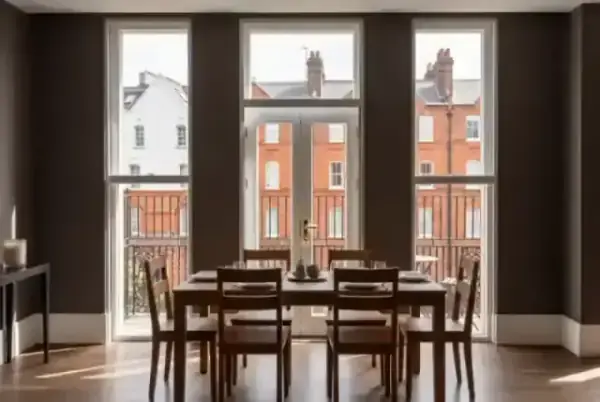
When Sarah called us, she was worried that secondary glazing might look bulky or "clunky" inside her refined dining room. We assured her that our approach is about invisibility. Our goal is to make the secondary units disappear into the existing window reveal.
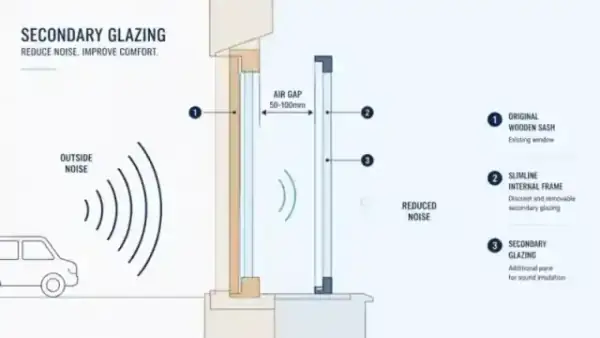
After a detailed survey, we recommended a bespoke secondary glazing system designed specifically for secondary glazing for period homes in London.
The Technical Specs
We didn't just put up another pane of glass. We engineered a system to tackle her specific problems:
- Acoustic Laminated Glass: We used 6.4mm acoustic glass, which features a special interlayer designed to dampen sound vibrations.
- The 100mm Air Gap: This is the secret sauce. By leaving a 100mm to 150mm gap between the original window and the secondary unit, we created a "decoupled" system. This gap is what actually kills the noise, far outperforming standard double glazing.
- Bespoke Frames: For her large sash windows, we used slimline horizontal and vertical sliders that aligned perfectly with the original glazing bars.
You can read more about the science behind these results in our ultimate guide to acoustic glass.
The Installation: No Dust, No Fuss
One of the biggest misconceptions about window upgrades is the mess. Because we aren't ripping out old frames or doing structural work, the installation is remarkably clean.
For Sarah’s three-bedroom flat, the entire process took just over a day. We worked room-by-room, ensuring her furniture was protected and that the original woodwork remained untouched. Since secondary glazing is installed internally, there was no need for scaffolding: a huge relief for Sarah, as scaffolding in Kensington often requires expensive permits and adds weeks to a project.
The Result: A "Night and Day" Transformation
The most rewarding part of our job is seeing a client’s reaction the first time they close the new secondary units. When we finished the installation in Sarah’s living room and slid the panels shut, the transformation was immediate.
1. Measurable Silence
The noise reduction was staggering. We moved from an intrusive 75dB environment to a tranquil indoor level of around 35-40dB. In acoustic terms, a 10dB reduction is perceived by the human ear as a halving of loudness. Sarah’s 35dB drop meant the traffic noise was reduced by over 80%: turning the roar of the Cromwell Road into a distant, ignorable hum.
If you're wondering if you can achieve similar results, check out our guide on how to achieve 80% noise reduction in your London flat.
2. Thermal Comfort and Savings
Beyond the silence, the "jumpers on the sofa" era was over. Secondary glazing acts as a powerful thermal insulator, creating a pocket of still air that prevents heat from escaping. Sarah noticed that her flat stayed warm long after the heating was turned off. On average, our clients see a 15% reduction in annual heating bills, which adds up quickly in a large Kensington property.
3. Preserved Character
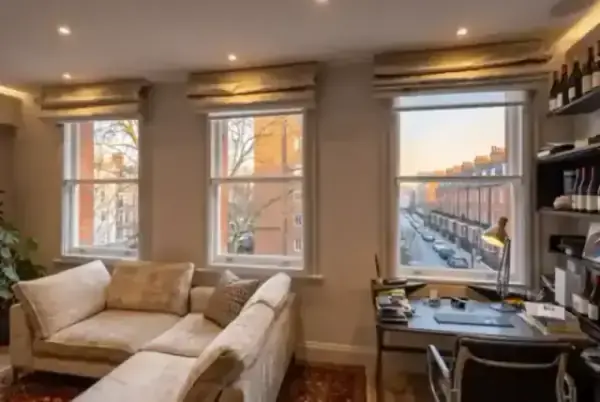
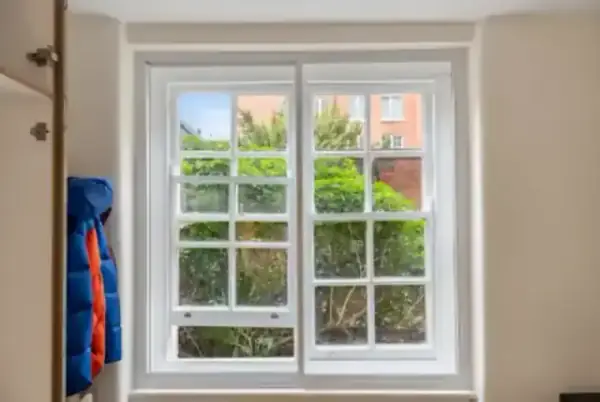
From the street, the flat looked exactly the same. The original sashes remained the stars of the show. Inside, the slimline frames were finished in a matching white that blended perfectly with the shutters. Sarah was able to satisfy the conservation requirements while enjoying a home that finally felt modern in its performance.
Why This Works for London Homeowners
Sarah's story isn't unique. Many of our clients come to us after being told by other companies that they "have" to replace their windows to get results. That’s simply not true: and often, it’s not even legal in listed buildings.
Secondary glazing is typically 40-60% cheaper than full window replacement. It’s also significantly less disruptive. When you weigh the costs of a full replacement (often £1,200+ per window plus redecorating) against secondary glazing (£300-£500 per window with no mess), the choice for most Londoners becomes very clear.
You can see a full breakdown of these differences in our comparison of secondary glazing vs. double glazing for period homes.
Take the First Step Toward a Quieter Home
If you're currently living with the "red route" roar or feeling the bite of a London winter through your original windows, you don't have to just "deal with it." Whether you’re in a listed building in Kensington or a Victorian terrace in Chelsea, there is a way to have the best of both worlds: heritage beauty and modern comfort.
We’ve helped hundreds of Londoners reclaim their homes from noise and cold. It all starts with a simple conversation and a survey of your specific windows.
Ready to find some peace and quiet? Book a free survey with our Kensington experts today and let’s see how we can transform your space.