
If you live in one of London’s beautiful period homes, you already know the struggle. You love the character of your original sash windows, but you probably don’t love the rattling, the icy draughts, or the sound of the 7:00 AM bin lorry feeling like it’s inside your bedroom.
The big question is: can you actually do anything about it without getting into a legal tangle with your local planning office?
The short answer is yes. For most homeowners in conservation areas, secondary glazing is the "magic bullet." It’s almost always permitted because it’s an internal, reversible change that doesn't touch the historic exterior. Even for Grade II listed buildings, it is the preferred solution recommended by Historic England.
Why Historic England is on Your Side
When it comes to heritage windows, Historic England generally takes a "repair, don't replace" stance. They aren't being difficult for the sake of it; original timber frames and hand-blown glass are part of the building's soul. Replacing them with modern double glazing: even "slimline" versions: often changes the reflection of the glass and the thickness of the frames, which can land you in hot water with conservation officers.
This is where secondary glazing for heritage windows shines. Historic England explicitly advocates for it because it is reversible. If someone wanted to return the building to its exact 19th-century state in a hundred years, they could simply unscrew the secondary frame without having damaged the original fabric of the house.
Planning Permission: The Unlisted vs. Listed Divide
Navigating the rules depends entirely on how your property is classified.
1. Unlisted Homes in a Conservation Area
If your home is in a conservation area but isn't individually listed, you’re in a great position. Planning control in these areas is primarily concerned with the external appearance. Since secondary glazing sits on the inside, it usually falls under "permitted development."
However, keep an eye out for Article 4 Directions. These are specific local rules that can strip away some of your rights to change windows. Even then, because secondary glazing is internal, it rarely requires a formal application. A quick check of your council’s website is always a good idea, but for 95% of our clients in London conservation areas, it's a green light from day one.
2. Grade II (and Grade I) Listed Buildings
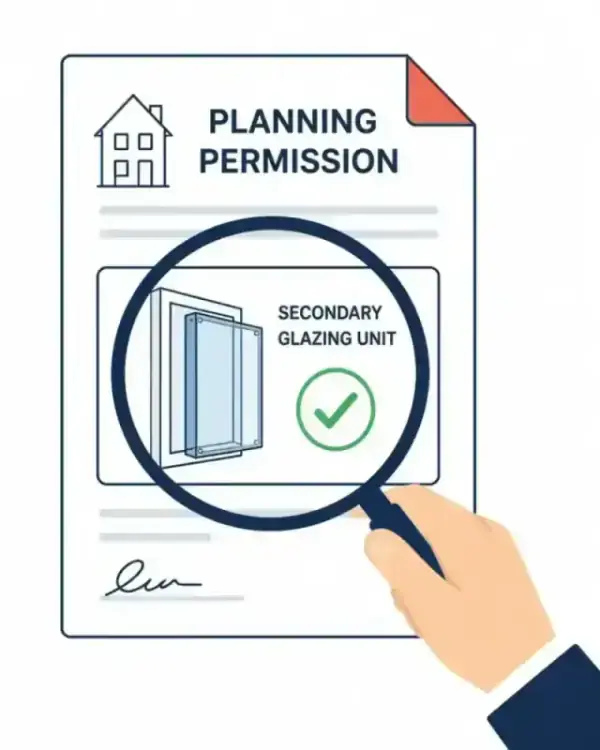
For secondary glazing for listed buildings, the rules are slightly tighter. You aren't worried about planning permission here; you're looking at Listed Building Consent (LBC).
Because LBC covers the interior of the building as well as the exterior, any change that affects the "special interest" of the property might need consent. The good news? Well-designed, discreet secondary glazing is almost always approved. In many cases, if the installation doesn't involve cutting into original shutters or decorative architraves, some councils don't even require a formal application.
Avoiding the "Planning Traps"
Even though the path is generally clear, there are a few traps that catch people out:
- The "Internal Means Free" Myth: Just because it’s inside doesn't mean it’s invisible to the law if your building is listed. If your secondary glazing blocks the use of original internal shutters, a conservation officer might take issue with it.
- The Bulkiness Problem: Using heavy, chunky plastic frames that are visible from the street can ruin the "sightlines" of your windows. We always recommend slimline aluminium frames that align perfectly with your original sash window secondary glazing meeting rails.
- Permanent Damage: Avoid any system that requires heavy-duty modifications to the original timber. The goal is "low impact."
Thermal Performance: Beyond the Red Tape
It’s not just about keeping the council happy; it’s about staying warm. Period homes are notoriously difficult to heat, often losing up to 25% of their warmth through leaky windows.
When we talk about U-values (the measure of how much heat escapes), a single-pane sash window usually sits at a dismal 5.8. By adding secondary glazing with thermal glass, you can drop that number to around 1.8 or 1.9. In plain English: you’re cutting heat loss by over 60%.
| Window Type | Typical U-Value (Lower is better) | Heat Loss Reduction |
|---|---|---|
| Single Glazing | 5.8 | 0% |
| Standard Secondary Glazing | 2.7 | ~50% |
| Low-E Secondary Glazing | 1.8 | ~65% |
Silence is Golden (and 80% Quieter)
If you live near a busy road in Chelsea or under a flight path in Richmond, the thermal gains are often secondary to the acoustic ones.
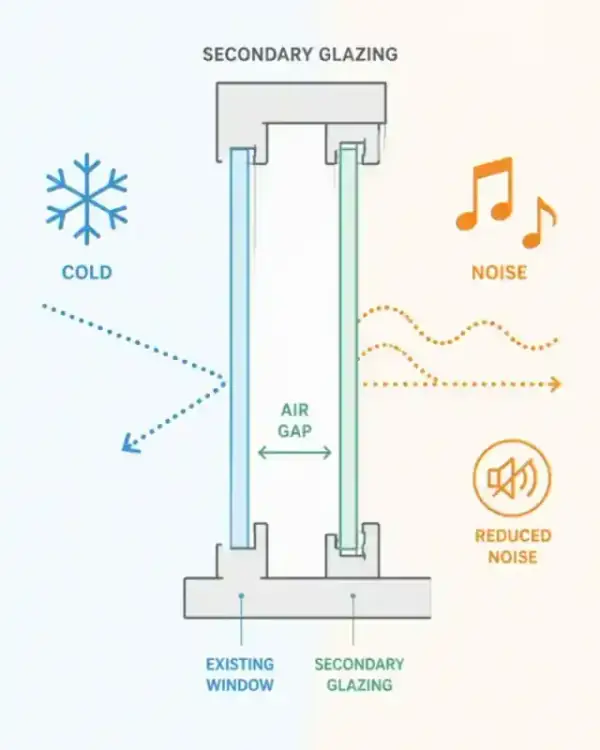
Standard double glazing is actually quite poor at stopping low-frequency traffic noise because the two panes of glass are too close together. Secondary glazing creates a "large air cavity": ideally 100mm to 200mm: between the original window and the new pane. This gap acts as a buffer that can reduce noise by 70-80% (up to 50 decibels). It’s the difference between hearing a bus engine in your living room and hearing a faint hum.
Choosing the Right Style for Your Heritage Windows
One size definitely does not fit all. To keep your windows looking authentic and remaining functional, you need to match the opening style:
- Vertical Sliders: The perfect partner for sash window secondary glazing. The panes slide up and down just like your originals, so the frames stay hidden behind your existing timber.
- Hinged Units: These open like a door, making them ideal for casement windows or where you need full access to the original window for cleaning or ventilation.
- Horizontal Sliders: Great for wider windows or those with multiple vertical panes.
- Lift-Out Units: A cost-effective choice for windows you rarely need to open, like a small bathroom window or a landing light.
A Real-World Success Story
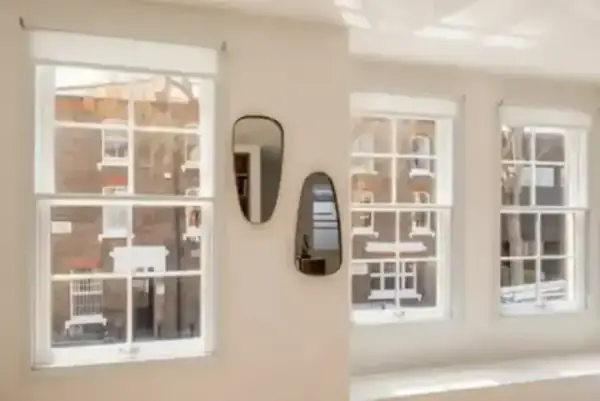
We recently worked with a homeowner in a Grade II listed terrace in Islington. They were struggling with freezing winters and the constant noise of the local high street. They had been told by a window salesman that they needed "heritage double glazing" for £30,000: a move that would have almost certainly been rejected by the conservation officer and required months of paperwork.
Instead, we installed bespoke secondary glazing for less than half that cost. Because we matched the RAL colour of the frames to their existing woodwork and aligned the bars perfectly, the installation was virtually invisible from the street. The homeowner didn't need a lengthy consent process, their heating bills dropped immediately, and: most importantly: they finally got a full night's sleep.
Your Next Steps
Upgrading a heritage home doesn't have to be a battle against bureaucracy. If you’re looking to boost your home’s performance while keeping its history intact, here’s our advice:
- Check your listing: Use the National Heritage List for England to see if you’re Grade II or just in a conservation area.
- Measure the gap: Ensure you have enough depth on your window sill (usually about 50-100mm) for a secondary unit.
- Talk to an expert: We deal with London’s conservation officers and heritage properties every single day.
Secondary glazing isn't just a compromise; it’s often the best technical solution for the unique challenges of a period property. It’s warmer, quieter, and significantly cheaper than a full replacement: all while keeping the history of your home right where it belongs.