
If you live in a London conservation area, you already know the struggle. You love the character of your home, the original sash windows, the weathered brickwork, the history in the glass, but you probably don't love the draft that whistles through the gaps or the way the sound of the 7 a.m. bin lorry feels like it's happening right at the foot of your bed.
The natural instinct is to think about new windows. But the moment you start looking into it, you hit a wall of bureaucracy. Between Article 4 Directions, conservation officers, and the eye-watering cost of "like-for-like" timber replacements, many homeowners simply give up and buy a thicker jumper.
Here is the good news: you can have a warm, quiet home without a single planning application. In the vast majority of cases, internal secondary glazing is the "cheat code" for London’s historic properties. It’s effective, it’s significantly cheaper, and, best of all, it usually doesn't require a single piece of paperwork from the council.
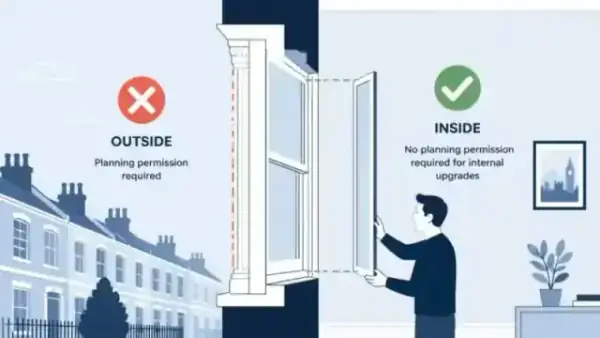
The Golden Rule: Inside vs. Outside
The simplest way to understand conservation area rules is to look at where the work is happening. Conservation area status is designed to protect the "character and appearance" of the neighborhood. In the eyes of a planning officer, that character is defined by what people can see from the street.
- Replacing Windows (The Outside): This changes the external appearance. Even if you use the same materials, the thickness of the glass or the profile of the frames can change how the building looks. This is why it almost always requires planning permission.
- Secondary Glazing (The Inside): This is an internal addition. It doesn’t change the original window; it just sits behind it. Because it has zero impact on the street-facing character of the building, it is almost universally classed as "Permitted Development."
For most Londoners, this is the difference between a project that starts in two weeks and a project that gets tied up in council emails for six months.
What Exactly is an Article 4 Direction?
You might hear your neighbors or a surveyor mention "Article 4." This sounds technical, but it’s actually quite simple. In a normal conservation area, you have certain "permitted development rights", things you can do without asking.
However, many London councils (like Westminster, Kensington & Chelsea, and Islington) have applied Article 4 Directions to specific streets. This essentially "turns off" those rights. If your home is under Article 4, you need planning permission for even minor external changes, such as painting your front door a different color or, you guessed it, replacing your windows.
The beauty of secondary glazing for heritage windows is that it usually bypasses Article 4 restrictions entirely. Because it’s an internal fitting, it isn't considered an "alteration to the elevation" of the house.
The Sash Window Trap: Why "Like-for-Like" Isn't Always Easy
Many homeowners think, "If I just replace my old sashes with identical new double-glazed sashes, the council won't mind."
Unfortunately, it’s rarely that simple. Modern double-glazed units are significantly thicker than original single panes. To hold that extra weight and thickness, the wooden frames (the "stiles" and "rails") often have to be thicker too. A conservation officer with a keen eye will notice that the delicate proportions of your 19th-century window have been lost, and they can, and often do, reject the application.
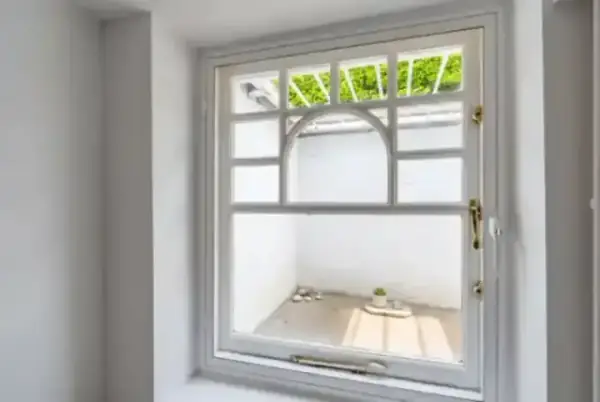
This is where secondary glazing shines. You keep your original, delicate sash windows exactly as they are. We then install a slimline, discreet frame on the inside that aligns perfectly with your existing bars. You get the thermal benefits of double (or even triple) glazing without losing the architectural soul of your home.
Listed Buildings: A Different Level of Protection
If your property isn't just in a conservation area but is actually Grade II Listed, the rules are stricter. While conservation areas focus on the street view, Listing protects the entire fabric of the building, inside and out.
Even then, secondary glazing is the preferred solution for Historic England. They generally prefer it over double glazing because it is "reversible." If someone 100 years from now wanted to return the house to its exact original state, they could simply unscrew the secondary units without having damaged the historic windows.
If you are in a Grade II listed building, we always recommend a quick chat with your local conservation officer. However, because our systems are ultra-slim and non-intrusive, they are almost always granted consent.
Navigating the Conservation Officer Conversation
If you do find yourself needing to speak with a planning or conservation officer, here are three tips to make the process smoother:
- Use the word "Reversible": This is music to their ears. It shows you aren't making permanent, destructive changes to the building's history.
- Focus on Energy Efficiency: Councils are under pressure to meet "Net Zero" targets. Framing your secondary glazing as a way to reduce heat loss and carbon emissions makes you an ally in their goals.
- Show, Don't Just Tell: We can provide technical drawings and photos of similar installations. When an officer sees how slim the profiles are, their concerns about "visual clutter" usually vanish.
Beyond Planning: The Acoustic Bonus
While many homeowners start this journey looking to stay warm, they often find the biggest benefit is the silence. Conservation areas in London, think Marylebone, Chelsea, or Greenwich, are beautiful, but they aren't exactly quiet.
Standard double glazing is okay at stopping heat loss, but it's surprisingly mediocre at stopping low-frequency traffic noise. Secondary glazing is far superior for soundproofing because the large air gap between the two panes of glass acts as a massive "acoustic buffer." In many cases, we can reduce street noise by 70-80%, turning a noisy London bedroom into a peaceful sanctuary.
Making the Practical Choice
Choosing the right approach for your windows doesn't have to be a headache. If you're weighing up your options in a conservation area, ask yourself these three questions:
- Is my building listed? If yes, you'll need a quick check for consent, but secondary glazing is your most likely path to approval.
- Is there an Article 4 Direction? If yes, replacing your windows will be a long, expensive planning process. Secondary glazing is your shortcut.
- Is noise an issue? If you live near a main road or a pub, secondary glazing will outperform new double glazing every single time.
At Secondary Double Glazing London, we specialize in these "tricky" properties. We’ve worked in almost every borough in the city, and we know exactly how to design an installation that keeps the planners happy and your home comfortable.
Ready to upgrade your heritage windows?
You don't need to choose between a historic home and a comfortable one. Our team can survey your property, explain the specific rules for your borough, and show you exactly how our discreet systems will look in your rooms.
No planning forms, no scaffolding, and usually just a one or two-day installation. It’s the smarter way to modernize a classic London home.
WhatsApp us