
Living in the Royal Borough of Kensington and Chelsea or the heart of Westminster often feels like a masterclass in compromise. You get the world-class architecture, the history-soaked streets, and the proximity to the city's finest parks. But you also get the A4. You get the A40 Westway. And you definitely get the constant, low-frequency hum of the red London buses.
For many homeowners in these iconic areas, the "London hum" isn't a gentle background noise: it’s a persistent intruder that keeps you from sleeping, working, or simply enjoying your own living room. If you live in a Grade II listed Georgian terrace or a period conversion, you’re often stuck with original single-glazed sash windows that, while beautiful, offer about as much soundproofing as a piece of cling film.
Because you can’t exactly tear out those historic windows, many residents feel trapped. But as we’ve seen across dozens of projects, there is a way to turn that traffic chaos into a silent sanctuary without touching a single original brick.
Case Study 1: The Cromwell Road Challenge
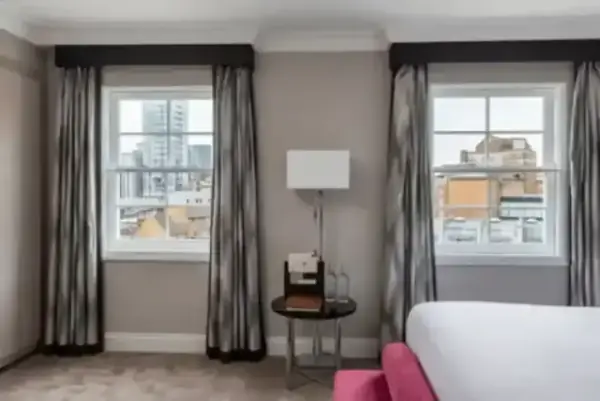
Cromwell Road is one of London’s busiest arteries. If you live here, you know that the traffic never truly sleeps. We recently worked with a homeowner in a stunning Grade II listed Georgian terrace directly facing the A4.
The Problem
The external noise levels at pavement level were consistently hitting 75–82 dB(A), with peaks of 92 dB(A) whenever an emergency vehicle roared past. Inside the master bedroom, the original sash windows were letting in enough noise that normal conversation was difficult, and deep sleep was a distant memory.
The Solution
Because the building was Grade II listed, full window replacement was out of the question. We designed a high-performance secondary glazing London solution specifically for these deep-set Georgian windows. We used 10.8mm acoustic laminate glass: a heavy-duty glass with a specialized interlayer designed to dampen sound waves: and installed it with a substantial 180mm air gap behind the original windows.
The Result
The transformation was, quite literally, life-changing. We achieved a -52dB reduction. To put that in perspective, the indoor levels dropped from a roaring 70+ dB to a whisper-quiet 28 dB. The homeowner described it as "closing the door on the world."
Case Study 2: The Westway’s Shadow in Notting Hill
Just a few miles away, near Notting Hill Gate, a Victorian garden-flat conversion faced a different kind of monster: the A40 Westway.
The Problem
Living near an elevated motorway brings a unique set of acoustic challenges. The noise isn't just coming from the front; it bounces off surrounding buildings and the motorway structure itself. Our client was dealing with sustained 80dB levels, a mix of high-speed tyre "hiss" and heavy engine rumble.
The Solution
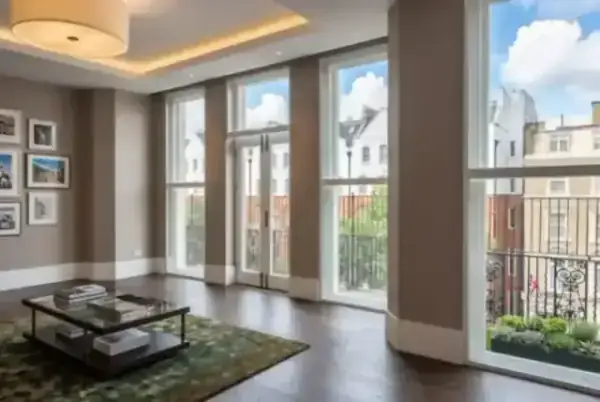
For soundproofing flats Kensington residents often need to tackle multiple windows in a single room. In this flat, we installed bespoke acoustic secondary glazing across three large sash windows in the living area. The key here was precision. We matched the meeting rails of the secondary units exactly to the original windows to ensure the visual impact was virtually zero from the outside.
The Result
By utilizing the same 10.8mm acoustic laminate, we again hit that "magic number" of -52dB reduction. The client, who works from home, finally had a space where they could host video calls without the background roar of the A40 making it sound like they were sitting on the hard shoulder.
Case Study 3: The Westminster Bus Junction
Our third case takes us to a period flat in Westminster, situated right next to a busy junction where three bus routes converge.
The Problem
Unlike the steady flow of a motorway, this noise was rhythmic and jarring. The heavy vibration of idling buses and the "whoosh" of air brakes were the primary complaints. The homeowner loved the character of their secondary glazing for period homes London location but hated the constant interruption.
The Solution
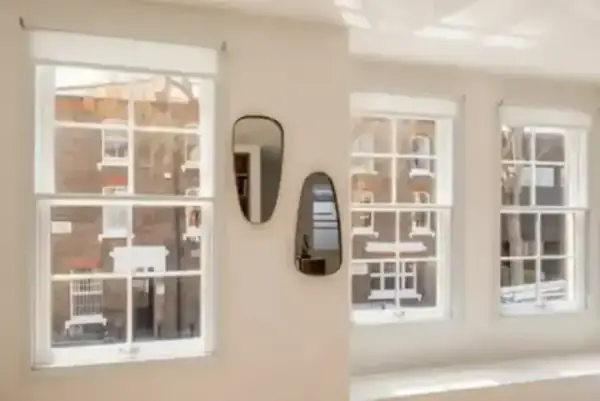
Bus noise is particularly high in low-frequency energy, which standard double glazing is notoriously bad at blocking. We used a combined approach: secondary glazing with staggered glass thicknesses (using 10.8mm laminate) and a 150mm air gap. This "de-couples" the two panes of glass, preventing the sound vibrations from traveling through the window unit.
The Result
The indoor environment shifted from "unpredictably loud" to "serenely stable." Even when a bus was idling right outside the glass, the sound inside was barely a murmur, comparable to a quiet library.
Why 10.8mm Laminate and 180mm Air Gaps?
You might be wondering why we don't just use standard glass. The science of sound is all about mass and distance.
- The Glass: 10.8mm acoustic laminate (like Stadip Silence) is the "heavyweight champion" for London homes. It’s dense enough to stop low-frequency rumble (buses and HGVs) and has a special resin layer that prevents the glass from vibrating like a drum skin.
- The Air Gap: This is where the magic happens. While standard double glazing usually has a 16-20mm gap, our secondary glazing uses gaps of 100mm to 180mm. This large cushion of air acts as a massive shock absorber for sound waves.
- The Result: While standard double glazing might give you a 30dB reduction, a properly specified secondary system can double that performance. Every 10dB reduction is perceived by the human ear as a halving of the noise level. So, a 50dB+ reduction isn't just a slight improvement: it's a total overhaul of your home’s atmosphere.
Is Your Home Ready for a Transformation?
If you’re tired of the Cromwell Road roar or the Westminster hum, you don’t have to move, and you don’t have to settle for noisy nights. Secondary glazing is usually 40-60% cheaper than full window replacement and, more importantly for our Kensington and Chelsea neighbors, it’s the only way to get true acoustic performance in a listed building or conservation area.
We’ve spent years perfecting these installations across West London. Most of our projects take just 1-2 days to install, with zero mess and zero damage to your original shutters or plasterwork.
If you're ready to reclaim your peace and quiet, get in touch with our team today. We can start with a simple chat about your street and what kind of noise you're facing, then move on to a detailed survey to find the perfect silent solution for your home.
WhatsApp us