
If you’re staring at your latest energy bill and wondering why it looks more like a mortgage payment, you aren't alone. For many of us living in London’s beautiful period homes, those classic sash windows are a double-edged sword: they look stunning, but they’re often about as airtight as a sieve.
So, let's get straight to the point: Yes, secondary glazing can lower your bills. In fact, it's often the fastest way to get a Return on Investment (ROI) compared to almost any other window upgrade. While full double glazing has its perks, the sheer cost and red tape in London often make it a financial marathon. Secondary glazing, by contrast, is more of a sprint.
Here are 10 things you need to know about the ROI of secondary glazing and how it stacks up against the alternatives.
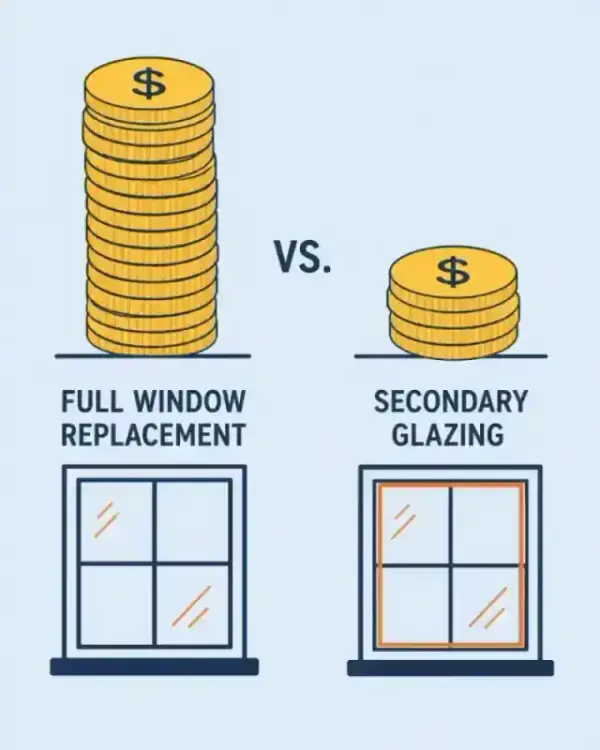
1. It’s 40-60% Cheaper Upfront
The most immediate "return" is the money that stays in your bank account on day one. When you look at secondary glazing costs, you’re typically looking at £200 to £400 per window. If you were to go for a full window replacement in a London period home, you’d easily be quoted £800 to £1,200 per window, and that’s for basic uPVC. If you want timber frames that match your home's original aesthetic, that price climbs even higher.
By choosing secondary glazing, you’re essentially getting 80% of the thermal benefit for less than half the price.
2. You’ll See a 15-20% Drop in Heating Bills
Let’s talk numbers. Standard single-paned glass is a thermal disaster. It has a high "U-value", a technical term we use to measure how much heat escapes. The higher the number, the more money you’re literally throwing out the window.
By adding a second layer of glass with a 100mm to 150mm air gap, you create a powerful insulating barrier. Most of our customers see a 15-20% reduction in their annual heating costs. In a drafty Victorian terrace, that can add up to hundreds of pounds saved every single year. You can read more about how this compares to full units in our guide on secondary glazing vs double glazing for energy bills.
3. Zero "Hidden" Installation Costs
Full window replacement is a messy business. It often involves ripping out frames, which means damaged plaster, ruined wallpaper, and a need for professional redecorating once the installers leave.
Secondary glazing is fitted to the inside of your existing recess. There’s no structural work, no broken plaster, and no need to hire a painter afterward. When calculating ROI, you have to factor in these "hidden" savings. With secondary glazing, the price you’re quoted is usually the total price you pay to get the job finished.
4. The "Acoustic ROI" (Your Sanity Matters)
While it’s hard to put a pound sign on a good night’s sleep, the noise reduction offered by secondary glazing is a massive value-add for Londoners. Because the gap between the two panes of glass is significantly wider than in standard double glazing (which usually only has a 16-20mm gap), it acts as a much better acoustic barrier.
We’re talking about a 70-80% reduction in street noise. If you live on a bus route or near a tube line, this "Quality of Life ROI" is often the main reason people make the switch.

5. It Preserves (and Boosts) Property Value
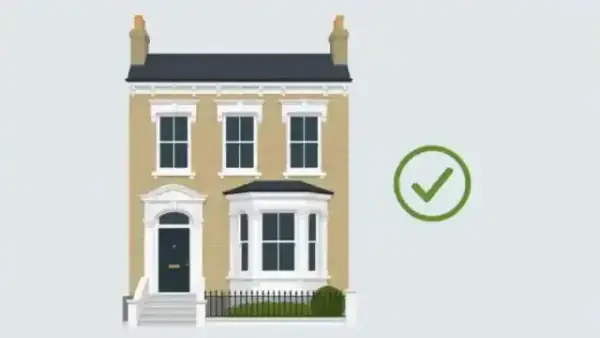
If you own a listed building or live in one of London's many conservation areas, your property's value is tied to its original features. Replacing historic sash windows with modern double glazing can actually decrease your home’s value if it’s done poorly or without permission.
Secondary glazing is the "invisible upgrade." It’s discrete, it’s reversible, and it’s almost always approved by heritage officers. It allows you to market your home as "energy efficient" and "soundproofed" without having stripped away its character. Check out our guide for listed buildings to see why this matters for your long-term investment.
6. Faster Payback Period
Because the upfront secondary glazing prices are so much lower, the "payback period", the time it takes for bill savings to cover the cost of the installation, is significantly shorter.
While full double glazing can take 30 to 50 years to pay for itself through energy savings alone, secondary glazing often hits that break-even point in under 10 years. In the world of home improvements, that’s a very healthy ROI.
7. No Planning Permission Fees
In many parts of London, like Kensington, Chelsea, or Westminster, applying for planning permission to change windows is a slow, expensive headache. You might spend hundreds on application fees and architectural drawings, only to be told "no."
Secondary glazing doesn't change the exterior of the building, so it rarely requires a planning application. That’s more money saved on administrative fees and more time saved on waiting for the Council to reply.
8. Lower Maintenance Costs
Modern secondary glazing systems are incredibly durable. Unlike some older double-glazing units where the seals can "blown" (leading to that annoying fog between the panes), secondary glazing is easy to access and maintain. If a pane ever breaks, or you want to upgrade the glass to a newer acoustic spec in ten years, it’s a simple, low-cost fix compared to replacing an entire integrated window unit.
9. Thermal Glass Upgrades
ROI isn't just about the frame; it’s about the glass. You can choose high-performance Low-E (low-emissivity) glass for your secondary units. This glass has a special coating that reflects heat back into your room. It’s a small extra cost upfront that significantly boosts the thermal ROI by keeping your home warmer for longer, even after the heating is turned off.
10. Installation Speed: Time is Money
A full window replacement for a whole house can take weeks of disruption. Secondary glazing installation is usually a 1-to-2-day job. For busy London professionals, the ROI on "time saved" is substantial. You won't need to take a week off work to manage contractors or live in a building site. We come in, fit the units, and leave your home exactly as we found it: just much quieter and warmer.
Is It Right For You?
If your goal is to slash your energy bills without spending five figures or fighting with your local council, secondary glazing is the most logical financial move. It bridges the gap between the charm of your original windows and the comfort of a modern home.
Ready to see how the numbers look for your specific property? We can help you navigate the different secondary glazing prices and options, from horizontal sliders to bespoke arched units.
Stop letting the heat (and your money) escape. Give us a shout for a quick chat about your windows: we’ll give you an honest assessment of what kind of ROI you can expect for your London home.
WhatsApp us