
If you’re living in one of London’s beautiful period homes, you already know the trade-off. You get the high ceilings, the intricate cornicing, and those iconic sash windows, but you also get the draughts that make your living room feel like a wind tunnel in January.
The direct answer to keeping that home warm without breaking the bank is simpler than you might think: secondary glazing can reduce your heat loss by up to 65% and costs roughly 60% less than replacing your windows entirely. It’s the middle ground that actually works, allowing you to keep your original timber frames while enjoying a home that finally stays warm when the heating is on.
Why Sash Windows Are Heat Magnets (The Wrong Way)
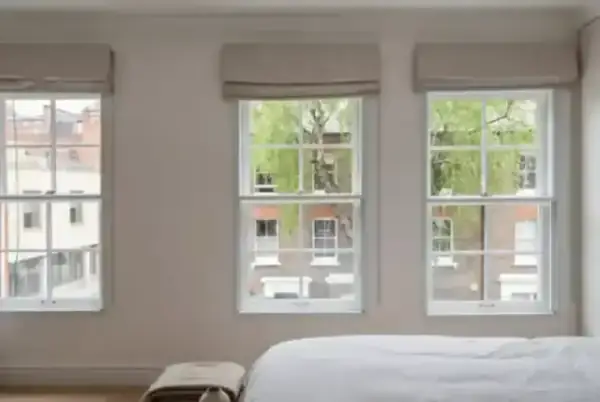
We love sash windows for their history, but thermally speaking, they’re often a disaster. Most original windows in Victorian or Georgian properties are single-glazed. In technical terms, these windows have a U-value of around 5.0. If you’re not a window geek, all you need to know is that a U-value measures how much heat escapes through a material. The higher the number, the worse the insulation. For context, a modern wall has a U-value of about 0.3. Your windows are effectively holes in your thermal bucket.
Beyond the glass itself, there's the "rattle." Because sash windows rely on a sliding mechanism, there are natural gaps where the sashes meet. Over decades, wood warps and paint builds up, leaving gaps that let cold air in and warm air out. This isn't just about a chill; it’s about your boiler working overtime to heat air that’s going to be outside in five minutes. If you’ve noticed your curtains fluttering on a windy day even when the windows are shut, you’re looking at one of the common mistakes with sash window insulation.
The Invisible Blanket: How Secondary Glazing Works
Think of secondary glazing as an invisible thermal blanket for your windows. Instead of ripping out the old window, we install a slim, discreet internal frame with a second pane of glass. This creates a sealed cushion of air between the original window and the new one.
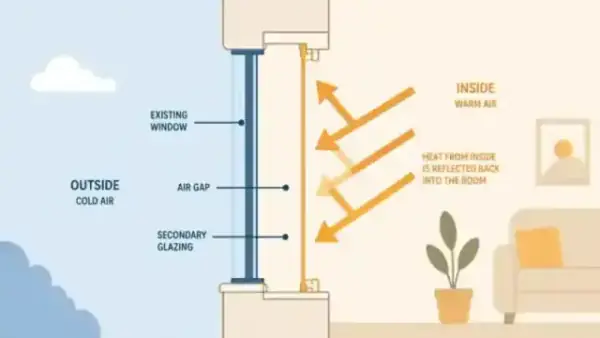
This air gap is the secret sauce. Air is a poor conductor of heat, so it acts as a barrier. When we use Low-E (Low Emissivity) glass, the performance gets even better. This glass has a microscopic coating that reflects heat back into your room rather than letting it pass through.
By adding this extra layer, that U-value of 5.0 drops down to around 2.1 or lower. In the real world, that means you’re cutting the heat escaping through your glass by more than half. You’ll feel the difference immediately; the "cold zone" that usually sits right next to your windows disappears, and your thermostat won't have to jump as often.
The Math: Why Your Wallet Will Thank You
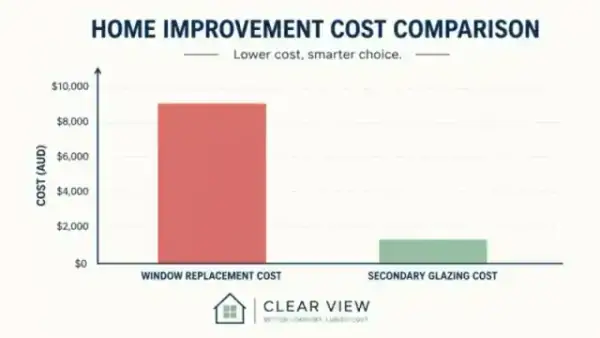
Let's talk numbers, because that’s usually where the decision is made. Replacing a full set of timber sash windows in a London terrace can easily run into the tens of thousands of pounds. It’s a massive investment that involves scaffolding, potential planning permission, and a fair bit of internal mess.
Secondary glazing is a different beast entirely. On average, it costs between 40% and 60% less than a full replacement. Because we aren't touching the exterior of your building, there’s no need for scaffolding, and the installation is usually done in a day or two.
But the savings don't stop at the installation. By sealing those draughts and boosting insulation, most homeowners see their heating bills drop by about 10-15%. When you compare secondary glazing vs double glazing for energy bills, the "payback period", the time it takes for the energy savings to cover the cost of the windows, is significantly shorter for secondary glazing.
Keeping the Planners Happy (and Your Home’s Soul Intact)
If you live in a listed building or a conservation area in London, you’ve likely already hit a brick wall with window replacement. Councils are, rightly, protective of the historical character of our streets. Plastic uPVC windows are usually a flat "no," and even high-quality slimline double glazing can be a struggle to get through planning.
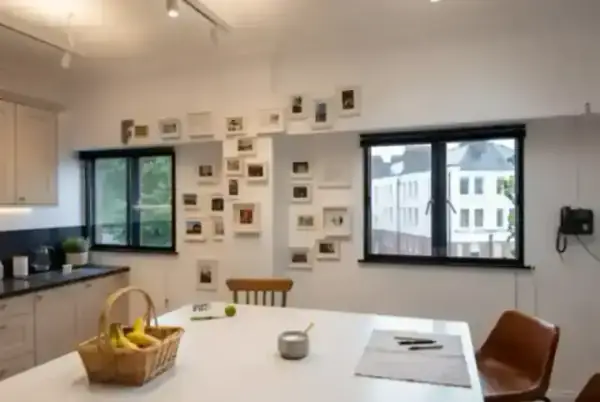
This is where secondary glazing shines. Because it’s an internal addition that is fully reversible, it rarely requires planning permission (though we always recommend checking if you're in a Grade I or II\\* listed building). It leaves the original facade untouched. From the street, no one can tell it’s there. From the inside, it looks like a clean, modern addition to your window sill. We can even match the frames to your existing paintwork, so they practically disappear.
The "Bonus" Benefits You’ll Notice Every Day
While this post is focused on warmth and costs, it’s hard to talk about secondary glazing without mentioning the quiet. A happy side effect of that thermal air gap is that it’s also incredible at blocking noise.
Standard double glazing has both panes of glass in one frame, which means they vibrate together. Secondary glazing has two independent frames with a much larger air gap (often 100mm or more). This can cut external noise by 70-80%. If you live near a busy bus route or a train line, the thermal upgrade is great, but the silence is often what our customers fall in love with.
You’ll also find that condensation becomes much less of an issue. Condensation happens when warm, moist indoor air hits a freezing cold pane of glass. By keeping the inner pane of glass closer to room temperature, you significantly reduce that morning puddle on the windowsill. It’s a small change that saves a lot of time spent with a towel and prevents mould from creeping into your timber frames.
Is It Right for Your Home?
Secondary glazing isn't a "one size fits all" product. We offer different styles to match how you use your windows:
- Vertical Sliders: These mimic your sash windows perfectly, sliding up and down so you can still reach your original catches and open the windows for fresh air.
- Hinged Units: These open like a door, which is great for large casement windows or if you need full access for cleaning.
- Horizontal Sliders: Ideal for wider windows or kitchens where you want a smooth, sliding action.
If you’re tired of wearing three jumpers indoors and watching your heating money vanish out the window, secondary glazing is the most logical step. It’s faster, cheaper, and often more effective at stopping draughts than a full window replacement.
The best way to start is with a quick chat or a survey. We can look at your specific windows, check the draught points, and give you a clear idea of the savings you can expect. You don't have to sacrifice the character of your period home just to stay warm. You just need to give those old windows a little bit of help.
WhatsApp us