
If you’re looking for the short answer: Yes, secondary glazing typically costs about 40% to 60% less than full double glazing replacement, and in many London period homes, it actually performs better at blocking out the roar of the A1 or the chill of a January morning.
Most people assume that if their windows are drafty or noisy, the only solution is to rip them out and start again. But if you live in a Victorian terrace, a Georgian townhouse, or a listed building, that "obvious" solution often comes with a £20,000 price tag and a mountain of paperwork.
The "secret" isn’t just about the lower price tag on the quote; it’s about a smarter way to upgrade your home without fighting the planning office or losing the original character that made you fall in love with the property in the first place.
Why is it so much cheaper?
It comes down to simple physics and logistics. When you opt for full double glazing, you’re paying for a massive amount of labor. You’re paying for someone to carefully extract your original windows (without breaking the surrounding brickwork), dispose of them, and then custom-build brand-new frames and glass units. If you’re in a conservation area, those new windows have to be "heritage grade," which easily doubles the cost.
Secondary glazing is a different beast entirely. We aren’t touching your original windows. Instead, we’re installing a sleek, high-performance internal frame: think of it like a second skin for your window.
Because we don’t need scaffolding, we don’t need to rebuild your window reveals, and the installation usually takes 1 to 2 days rather than weeks of construction, the savings are passed directly to you. For a typical three-bedroom London home, choosing secondary glazing over full replacement can save you anywhere from £8,000 to £15,000.
The Planning Permission "Get Out of Jail Free" Card
If you’ve ever tried to change a window in a listed building or a conservation area, you know it’s about as fun as a root canal.
Planning officers are (rightfully) protective of London’s architectural history. They often flat-out refuse double glazing because it involves destroying original timber and changing the external look of the street.
This is where secondary glazing becomes your best friend. Because it’s installed on the inside, it doesn't change the exterior appearance of your home. It’s also fully reversible: if a future owner wanted to remove it, the original window remains untouched. For this reason, Historic England and local councils almost always prefer secondary glazing. You get the comfort of a modern home without the six-month wait for a planning decision that might end in a "No."
But does it actually work? (Spoiler: Yes)
A common worry is that "secondary" means "second best." In reality, when it comes to noise and heat, secondary glazing often takes the gold medal.
The Noise Factor
If you live near a busy bus route or a train line, you know that standard double glazing still lets a surprising amount of rumble through. That’s because the two panes of glass in a double-glazed unit are very close together (usually about 16mm-20mm).
Secondary glazing creates a much larger air gap: often 100mm or more: between the original glass and the new pane. This gap acts as a "buffer zone" that traps sound waves. Combined with specialist acoustic glass, we can achieve a 70-80% reduction in noise. It’s the difference between hearing the neighbor’s car alarm and finally getting a full night’s sleep.

The Thermal Factor
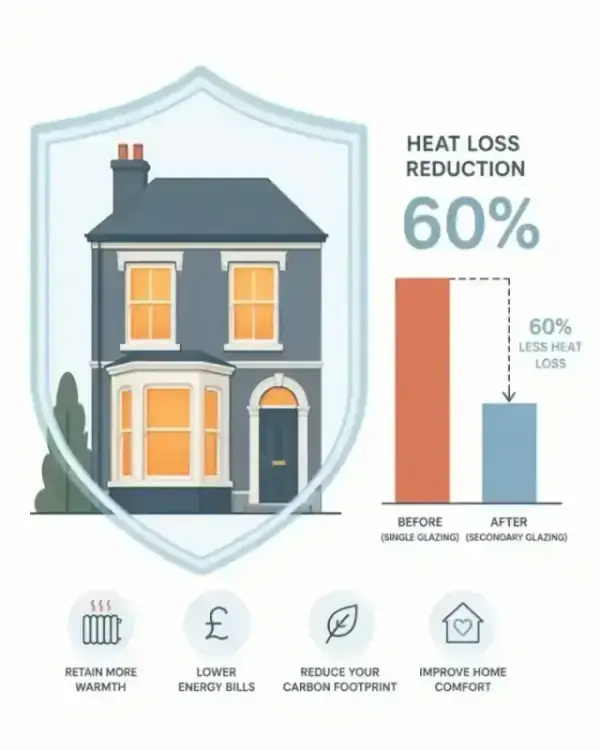
Heat loss through old sash windows is a major reason for those eye-watering winter energy bills. By adding an extra layer and sealing those pesky drafts, secondary glazing can reduce heat loss through your windows by over 60%. It’s like putting a high-quality puffer jacket over a vintage shirt. You keep the style, but you finally stop shivering.
A Real-World Comparison: The "Victorian Terrace" Dilemma
Let’s look at a quick example. We recently spoke with a homeowner in Hackney who had five large sash windows that were rattling every time a truck went by.
- Option A: Full Replacement. To get high-quality, timber, double-glazed sashes that would satisfy the local conservation officer, she was quoted £12,500. The lead time was 12 weeks, and the installation would involve scaffolding and significant internal re-decoration.
- Option B: Secondary Glazing. We installed bespoke, slimline secondary units with acoustic glass for £4,800. The installation was finished in a single afternoon, there was no mess, and the original sashes stayed exactly where they were.
She saved £7,700 (roughly 61%) and reported that the house felt quieter than her friend's new-build apartment down the road.
What about the look?
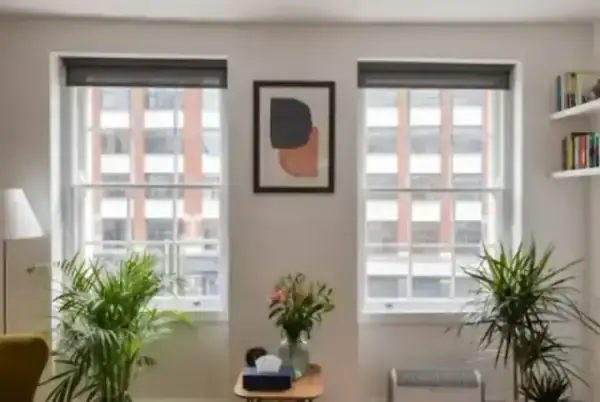
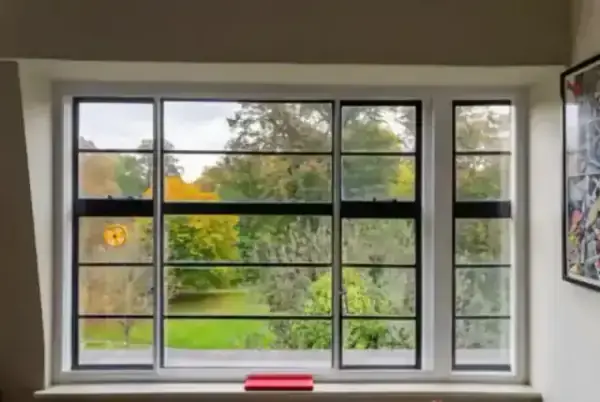
Twenty years ago, secondary glazing was often bulky and ugly. Modern systems are a different story. They are designed with ultra-slim aluminum frames that align perfectly with your existing window bars. Whether you have sliding sashes or casement windows, the goal is for the secondary unit to "disappear" once it’s installed. You can even choose colors: like sleek black or classic white: to match your interior decor.
So, which one is for you?
Full double glazing certainly has its place, especially in modern homes or if your original window frames are completely rotten beyond repair. But if your frames are structurally sound and you want to save a significant amount of money while boosting your home's performance, the choice is clear.
Secondary glazing is the winner if:
- You live in a listed building or conservation area.
- You want to keep your original period features.
- Noise reduction is your top priority.
- You want a solution that pays for itself through energy savings much faster.
- You want a stress-free installation that doesn't involve a construction site in your living room.
Don't let the "secondary" name fool you: for most Londoners, it's the first-class solution for a quieter, warmer, and much more affordable home.
Ready to see how much you could save? The best way to know for sure is a quick survey. We can look at your specific windows, measure the noise levels, and give you a clear, no-nonsense quote that usually ends up being the best "secret" you've ever discovered for your home.