
If you live along one of London’s "Red Routes": think the A1, the A4, or the heavy bus corridors of Westminster and Camden: you don’t need a decibel meter to tell you it's loud. You hear the low-frequency rumble of the Number 38 bus at 6:00 AM, the hiss of tyres on wet tarmac, and the rhythmic thrum of idling HGVs.
The question isn't whether you need better windows; it’s which type will actually let you sleep. Most homeowners assume that the "best" solution is to rip everything out and install high-spec triple glazing. But here is the direct, slightly surprising answer: For heavy London traffic noise, secondary glazing consistently outperforms full window replacement.
While a standard new double-glazed window might reduce noise by about 30 decibels (dB), a well-specified secondary glazing system can cut it by up to 50–55 dB. In the world of acoustics, that isn’t just a small improvement: it’s the difference between a room that feels "loud but muffled" and one that feels "genuinely silent."
Why London Red Routes are a Different Kind of Noise Challenge
Living on a side street is one thing. Living on a Red Route is quite another. These roads are the arteries of the city, carrying constant heavy traffic. This creates a specific acoustic profile dominated by low-frequency noise.
Buses and lorries emit long, deep sound waves that vibrate through the glass and even the frames of standard windows. This is why "acoustic curtains" or standard double glazing often fail here; they might block the high-pitched chirp of a bird or a distant siren, but they struggle to stop the physical vibration of a diesel engine.
Triple Glazing: The 3-Pane Myth
It sounds logical: if two panes are good, three must be better. However, when it comes to noise reduction windows, triple glazing is often a letdown.
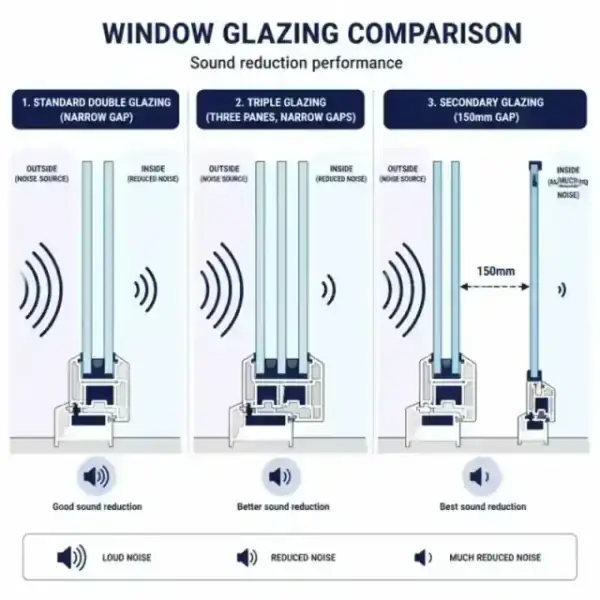
The problem lies in the gaps. In a triple-glazed unit, the panes of glass are very close together (usually only 12mm to 16mm apart). Because the air pockets are so small, the panes can actually "talk" to each other via vibration. The air acts like a tight spring, transferring the sound energy from the outer pane to the inner ones. This can sometimes create a "drum effect" where certain frequencies are actually amplified.
Triple glazing is fantastic for keeping heat in (its U-values are impressive), but for stopping a London bus, it usually only provides a 1–2 dB improvement over standard double glazing.
Secondary Glazing: The Power of Decoupling
The reason secondary glazing wins is all about decoupling. When we install a secondary unit, we aren't just adding glass; we are creating a massive air buffer.
To truly stop low-frequency traffic noise, you need a gap of at least 100mm to 200mm between the original window and the new internal pane. This large cavity breaks the sound wave's path. By the time the vibration passes through your original window and travels across that 150mm gap, it has lost most of its energy.
When we combine this gap with acoustic laminate glass: which features a clear, noise-dampening interlayer: the results are transformative. You are no longer just "muffling" the street; you are effectively building a second wall inside your window reveal.

What About "Acoustic Curtains"?
We often get asked if heavy curtains are a viable alternative. While acoustic curtains can help reduce "reverb" (the echo inside a room), they do almost nothing to stop noise from entering the room in the first place. Sound is like water; it will find the smallest gap. Curtains are porous and don't create an airtight seal, which is the first rule of soundproofing.
If you’re on a Red Route, curtains are a decorative touch, but they won't save your Sunday morning lie-in.
The Heritage Win: Preserving the London Aesthetic
Beyond the decibels, there is the matter of style. Many of the homes facing London's busiest roads are beautiful Victorian or Georgian period properties.
Full replacement is often not just expensive, but illegal if you live in a conservation area or a listed building. Replacing original timber sash windows with thick, chunky uPVC triple glazing often ruins the character of the property and can lead to planning disputes.
Secondary glazing is the "invisible" solution. Because it is fitted to the interior, the exterior appearance of your home remains untouched. We can match the lines of your original sashes so perfectly that, from the street, no one can tell it’s there. Inside, you get a slim, modern frame that blends into your window reveal.
Breaking Down the Numbers
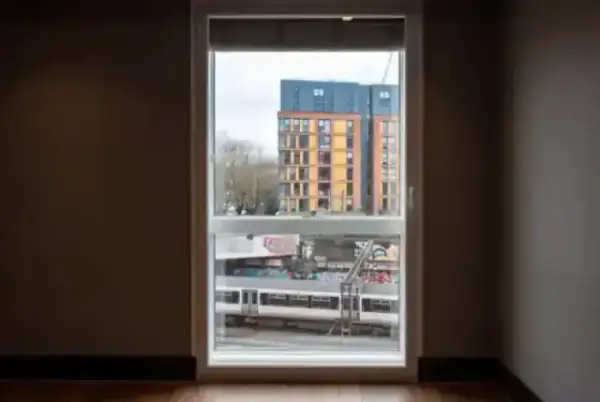
To make sense of the noise reduction, it helps to look at the decibel scale. Remember, the dB scale is logarithmic, meaning an increase of 10 dB is perceived by the human ear as a doubling of loudness.
- Single Glazing: 20–22 dB reduction (Essentially like leaving the window open).
- Standard Double Glazing: 28–32 dB reduction (Noticeable, but traffic remains the dominant sound).
- Acoustic Triple Glazing: 38–42 dB reduction (Good, but struggles with heavy bus rumble).
- Acoustic Secondary Glazing (150mm gap): 45–55 dB reduction (The gold standard for urban silence).
For a home on a 80 dB Red Route, secondary glazing can bring the internal noise down to 25–30 dB: the equivalent of a quiet library. That is the level required for restorative sleep and a peaceful home office environment.
The Practicalities: Installation and Cost
One final reason secondary glazing usually wins for Londoners is the lack of "renovation fatigue." Full window replacement is a major construction project. It involves scaffolding, removing old frames, making good the plasterwork, and often weeks of disruption.
In contrast, secondary glazing is a "dry" fit. We take precise measurements during an initial survey, manufacture the bespoke units in our workshop, and then install them: usually in just a day or two. There’s no scaffolding, no grit in your carpets, and no need to repaint your facade.
Cost-wise, secondary glazing typically sits at 40–60% cheaper than a full high-spec window replacement. You get better acoustic performance for a significantly lower investment.
Finding Your Quiet
Living in London shouldn't mean sacrificing your peace of mind. If you are tired of the Red Route roar and want to explore how a bespoke internal layer can cut your street noise by up to 80%, it’s worth looking past the marketing of triple glazing and focusing on the science of the air gap.
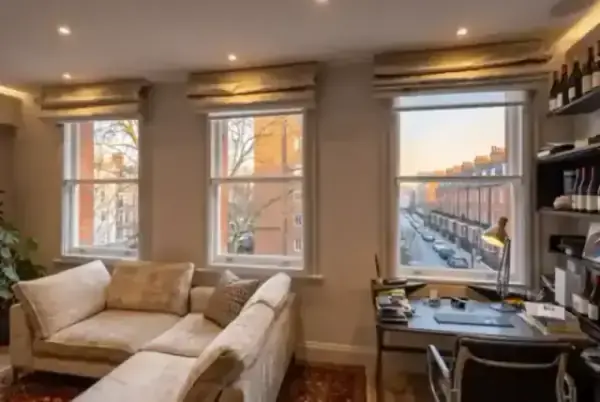
Whether you have a Victorian terrace in Islington or a modern flat in Canary Wharf, the right acoustic secondary glazing can transform your home from a front-row seat to traffic chaos into a genuine sanctuary.
WhatsApp us