
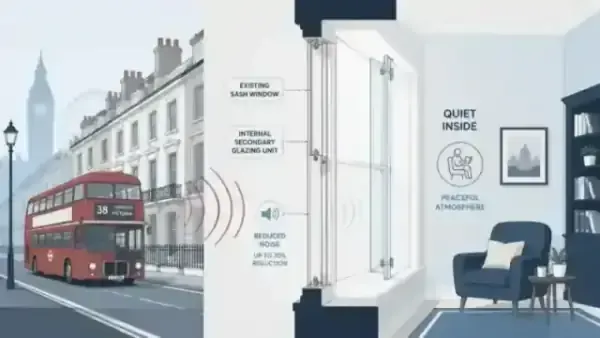
If you live anywhere near the A4 in Kensington, the A40 in Marylebone, or the busy stretches of the South Circular, you know the "Red Route" hum. It’s that low-frequency rumble of double-decker buses and delivery vans that seems to vibrate right through your pillows.
Living in a beautiful period flat in Westminster or Chelsea is a dream until you realise the original single-glazed sash windows were designed for a time when the loudest thing on the street was a horse and carriage. Today, these "Red Routes" carry nearly a third of all London traffic, often pushing noise levels past 75 decibels. To put that in perspective, that’s like trying to sleep with a vacuum cleaner running right outside your bedroom.
The good news? You don't have to move, and you don’t have to get into a fight with your local conservation officer about replacing your historic windows. Here is your five-step guide to silencing the city and finally getting a full night's rest using secondary glazing and acoustic glass.
1. Map Your Specific Noise Profile
Before you buy anything, you need to know what you’re up against. Noise isn't just "loud"; it has different frequencies. Red Route noise is particularly tricky because it’s dominated by "low-end" rumble: the heavy vibrations of engines.
You can actually check your building's exact noise exposure using the England Noise and Air Quality Viewer. If your façade is in the 65–70 dB range or higher, standard double glazing won’t cut it. You’re in a high-priority "Important Area" for noise. Understanding this helps you specify exactly how thick your secondary glazing needs to be. For most flats in Kensington or Westminster, we aim for a 80% noise reduction, which usually means moving from "intrusive" to "whisper-quiet."
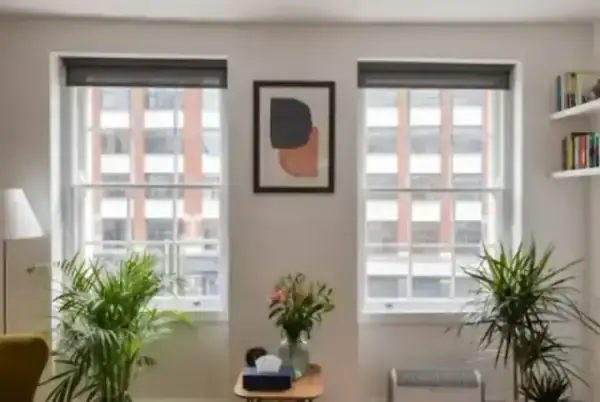
2. Respect the 100mm Magic Gap
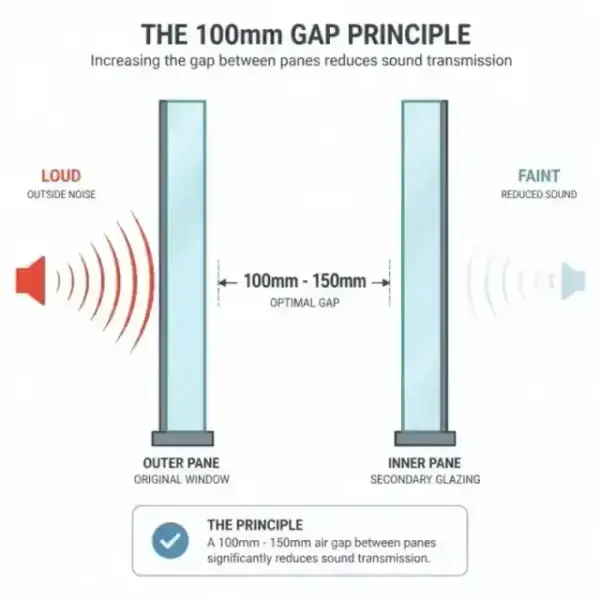
This is where most DIY or cheap soundproofing attempts fail. If you put two panes of glass too close together, they "couple" and vibrate as one unit, letting the noise pass straight through.
To silence a busy London road, the distance between your original window and the new secondary glazing is everything. We recommend a gap of at least 100mm to 150mm. This large pocket of air acts as a massive dampener, decoupling the sound waves so they lose energy before they hit the second pane. It’s the single most important factor in why the 100mm gap matters for acoustic performance.
3. Choose Acoustic Laminated Glass (Not Just "Thicker" Glass)
In the world of glass, mass is good, but "damping" is better. Standard glass is rigid. Acoustic laminated glass, however, consists of two layers of glass sandwiched around a special PVB (Polyvinyl Butyral) interlayer.
This interlayer acts like a shock absorber for sound. When a sound wave hits the glass, the interlayer absorbs the vibration rather than passing it through. This is particularly effective at tackling the "tyre hiss" and high-frequency sirens common on London’s main arteries. By using different thicknesses for your original window and the secondary pane (a process called "asymmetric glazing"), you also prevent resonance, ensuring no specific pitch can "leak" through.
4. Total Seal: The Anti-Leak Strategy
Think of your window like a boat: if there's a tiny hole, water will get in. If there’s a tiny air gap, noise will get in. Most noise issues in historic Kensington flats aren't actually the glass; they’re the gaps around the old timber sashes where the wind whistles through.
When we install secondary glazing for period homes, we use high-performance compression seals. The secondary frame is fitted snugly into the window reveal, creating an airtight barrier. This doesn't just stop the noise; it also kills the drafts that make London winters so expensive. You’ll find your heating bills dropping almost as fast as the decibel levels.
5. Navigate Planning without the Drama
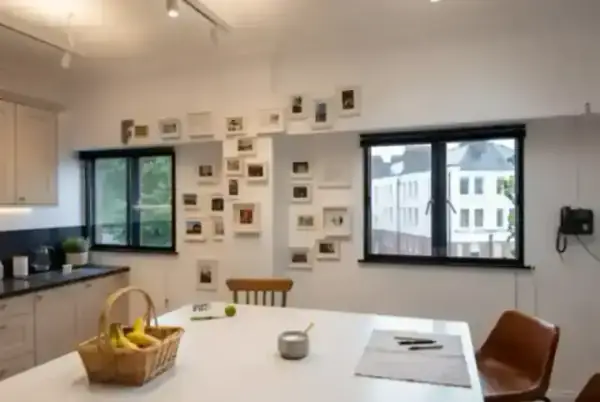
If you live in a Grade II listed building in Westminster or a conservation area in Chelsea, you probably know that changing your external windows is a planning nightmare. This is why secondary glazing is the "secret weapon" for London homeowners.
Because it’s installed internally and is fully reversible, it rarely requires planning permission. It leaves the historic facade untouched while giving you 21st-century acoustic performance. It's the conservation officer’s favorite because it preserves the heritage of the street while making the interior actually livable.
Real-World Impact: From Knightsbridge to Marylebone
We recently worked on a flat overlooking the busy Cromwell Road in South Kensington. The resident was using earplugs every night and still struggling to sleep. By installing a bespoke sliding secondary system with 6.4mm acoustic laminated glass and a 120mm air gap, we reduced the ambient noise from a peak of 72dB down to roughly 34dB.
In acoustic terms, that’s a transformation from "noisy office" levels to "quiet library." They no longer had to turn the TV volume up every time a bus went past.
Reclaiming Your Space
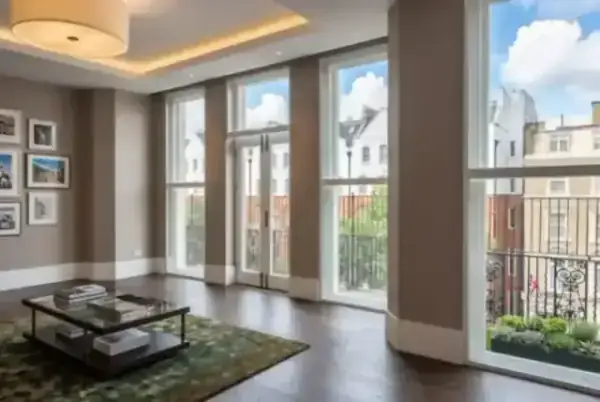
London’s Red Routes aren't going anywhere, but your sleepless nights can. By focusing on the "gap," the right glass, and a professional seal, you can turn a noisy historic flat into a sanctuary. If you’re tired of the A40 or the North Circular living in your bedroom with you, it’s time to look at what's happening inside your window frame.
Ready to see how much quieter your home could be? Take a look at our Kensington vs. Chelsea guide to see how we handle specific borough requirements, or get in touch for a survey to measure your specific noise levels.
WhatsApp us