
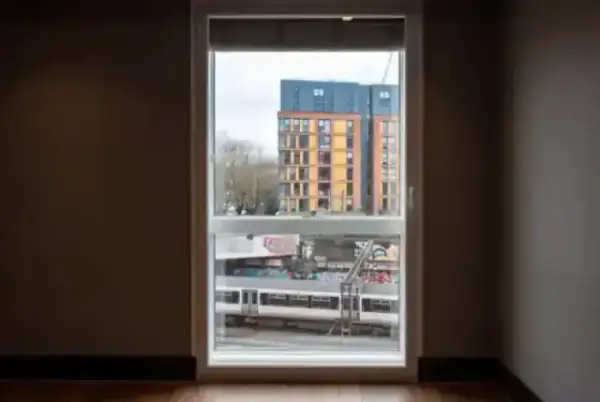
Living on a London "red route" means having the city’s pulse right at your doorstep. It’s convenient, sure, but it also means dealing with a constant 70 to 80-decibel (dB) roar of buses, black cabs, and delivery vans. If you’ve ever tried to have a conversation or sleep through the 6 AM rush on the A23 or the A40, you know that standard windows just don’t cut it.
The good news? You don't have to move to the countryside to find peace. By combining the physics of an air gap with the damping power of acoustic glass, we can turn that 80 dB "shout" into a 35 dB "whisper." Here is exactly how the science of quiet works and why secondary glazing is the gold standard for soundproofing London homes.
The Decibel Reality of London Life
To solve a noise problem, we first have to understand the numbers. In the world of acoustics, sound is measured in decibels (dB), which is a logarithmic scale. This is a fancy way of saying that sound doesn't grow linearly; a 10 dB increase actually feels like a doubling of the noise to your ears.
On a typical red route, your home’s façade is hit with levels between 70 dB and 80 dB. For context, the World Health Organization recommends that for a good night's sleep, background noise in a bedroom should be no higher than 30-35 dB.
If you have original single-glazed sash windows, they might only provide about 20-25 dB of reduction. That leaves you with 50-55 dB inside: roughly the volume of a dishwasher running in your bedroom. Standard double glazing is slightly better, hitting around 30 dB of reduction, but it often struggles with the low-frequency "thrum" of heavy engines. This is where high-performance noise reduction windows become essential.
The "Mass-Spring-Mass" Secret
Most people think that more glass is the only way to stop sound. While mass is important, the real secret to soundproofing is the air gap.
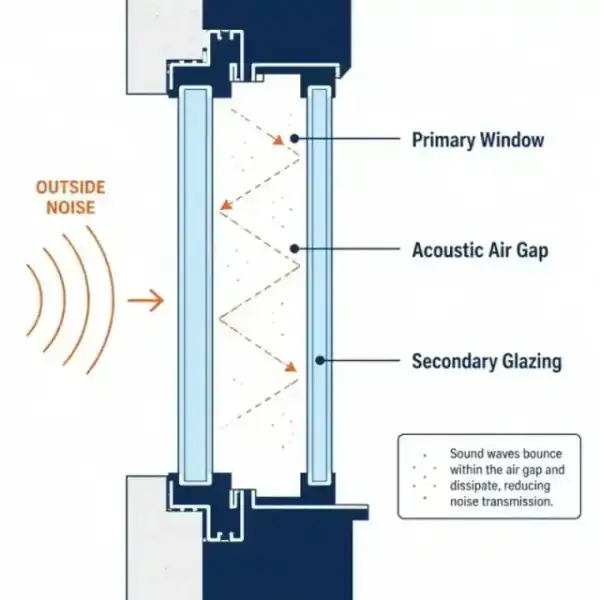
When we install secondary glazing, we aren't just adding another pane; we are creating a "Mass-Spring-Mass" system.
- Mass 1: Your existing primary window.
- The Spring: The air trapped between the two windows.
- Mass 2: The new secondary glazing unit.
When sound waves hit your outer window, they vibrate the glass. That vibration has to travel through the "spring" of air to reach the second pane. Because air is compressible, it absorbs a massive amount of that energy.
For the best results against London traffic, the size of this gap is critical. While standard double glazing has a tiny gap (usually 16mm to 20mm), secondary glazing allows for a gap of 100mm to 200mm. This larger gap is specifically tuned to kill low-frequency noise: the kind of deep bass rumble you feel in your chest when a double-decker bus idles outside.
Why Acoustic Glass is Different
Not all glass is created equal. Standard glass is rigid, which means it has a "critical frequency": a specific pitch where it vibrates easily and lets sound pass through like a hot knife through butter.
Acoustic glass solves this by using a laminated "sandwich" construction. It consists of two layers of glass bonded together with a special, clear viscoelastic interlayer (often Polyvinyl Butyral or PVB).
Think of this interlayer like a layer of acoustic honey. It acts as a dampening agent that absorbs vibration and disrupts the sound waves as they try to pass through. When you combine this specialized glass with the 100mm+ air gap of a secondary unit, you achieve a level of silence that even the most expensive new double-glazed windows can't match. In fact, we often see a 70-80% reduction in perceived noise following an installation.

Preservation Meets Performance
One of the biggest hurdles for Londoners living in period homes or conservation areas is that they aren't allowed to replace their original windows. You might have beautiful, drafty sash windows that are protected by law.
Secondary glazing is the perfect loophole. Because it is fitted to the inside of your existing window reveal, it doesn't change the external appearance of the building at all. You keep your heritage aesthetic, and the local council stays happy, while you finally get to hear your own thoughts.
Our units are designed with slimline aluminium frames that align perfectly with your original window's meeting rails. Whether you have sash windows, casements, or even arched heritage windows, the secondary layer remains virtually invisible from the street.
Real Results: What to Expect
If you are currently being kept awake by the red route commute, moving to a secondary glazing system with acoustic glass will feel like a transformation.
- Outside Noise (Red Route): 75 dB
- Single Glazing Reduction: -22 dB → Inside: 53 dB (Noisy office level)
- Acoustic Secondary Glazing Reduction: -42 dB → Inside: 33 dB (Library/Quiet bedroom level)
That 20 dB difference isn't just a number; it’s the difference between being woken up every time a siren goes past and sleeping through the night undisturbed. Beyond the quiet, you’ll also notice your heating bills dropping, as that same air gap that stops sound is also an incredible thermal insulator.
Ready to Reclaim Your Peace and Quiet?
Don't let London's traffic dictate your quality of life. At Secondary Double Glazing London, we specialize in bespoke installations that marry the latest acoustic science with the unique needs of London’s period properties. From the initial survey to a seamless, one-day installation, we handle it all.
Contact our team today for a free survey and find out how we can bring the "Science of Quiet" to your home.
WhatsApp us