
If you live in a London period home, you are likely familiar with the “seasonal dance.” In the winter, you’re layered in wool jumpers, nudging the thermostat up while feeling the tell-tale chill of a draught from your beautiful original sash windows. In the summer, those same rooms become greenhouses, trapping heat behind single-pane glass that offers little thermal reflection.
You want comfort, but you don’t want to sacrifice the historic character of your property with chunky modern uPVC replacements. This is why more homeowners than ever are turning to secondary glazing.
The short answer is this: Secondary glazing creates a high-performance thermal seal by adding a discreet second internal pane, trapping a pocket of air that acts as a powerful insulator. It reduces heat loss by up to 60% in winter and reflects external heat in summer, all while preserving your original windows.
In this guide, we will break down exactly how this technology works, the specific performance metrics you should care about and the long-term financial benefits of upgrading your home’s thermal envelope.
How It Works: The Science of the “Buffer Zone”
To understand secondary glazing benefits, you have to understand the air gap. Unlike standard double glazing, which has a small 16mm–20mm gap between panes, secondary glazing allows for a much larger cavity: typically between 100mm and 200mm.
This gap creates a “buffer zone” that serves two primary purposes:
- Thermal Resistance: Still air is a poor conductor of heat. In winter, the warmth from your radiators hits the internal secondary pane and is reflected back into the room. The cold air outside must work significantly harder to penetrate the secondary barrier.
- Convection Control: Single-glazed windows are notorious for “cold downdraughts.” As the air near the glass cools, it drops to the floor, creating a cycle of cold movement. Secondary glazing eliminates this by keeping the internal glass surface temperature much closer to the room temperature.
Performance Metrics: The U-Value
In the world of home improvement, we measure thermal efficiency using U-values. A U-value measures how much heat is lost through a specific material; the lower the number, the better the insulation.
| Window Type | Typical U-Value (W/m²K) | Thermal Efficiency Improvement |
|---|---|---|
| Single Glazing (Original) | 5.0–5.8 | Baseline |
| Standard Double Glazing | 1.2–1.6 | High |
| Secondary Glazing (with Low-E glass) | 1.8–1.9 | ~65% improvement |
While modern double glazing has a slightly lower U-value, secondary glazing is the gold standard for period homes because it achieves remarkably similar results without requiring planning permission or destroying original timber frames.
Winter Focus: Thermal Insulation for Sash Windows
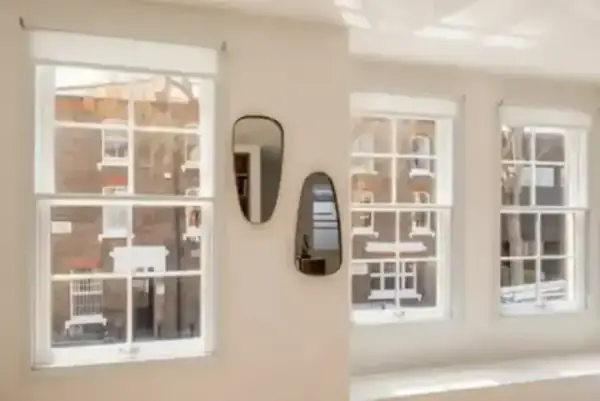
For owners of Georgian, Victorian and Edwardian properties, the primary challenge is thermal insulation for sash windows. Original sashes are designed with tolerances that allow them to slide, which unfortunately also allows air to leak through the meeting rails and brush seals.
When we install secondary glazing, we essentially “seal” the window from the inside.
Eliminating Drafts
Even if your original windows are in good repair, they aren't airtight. Our secondary units are fitted with high-quality compression seals. This stops the “whistling” draughts common in London flats during a January storm. By stopping the air ingress, you effectively lower the perceived cold in the room, meaning you can keep your thermostat at 19°C and feel warmer than you did at 22°C previously.
Condensation Reduction
Condensation occurs when warm, moist internal air hits a cold surface—the original glass. By adding a secondary layer, the internal pane stays warm, significantly reducing the risk of damp and mould growth on your window sills. Our measured survey can identify where ventilation and glass specification need to work together.
Summer Focus: Keeping the Heat Out
While most people think of insulation for the cold, the “Year-Round Comfort” promise is just as relevant in July. Single glazing offers very little resistance to solar gain.
Thermal Reflection
By using specific glass types, such as Low-E (Low-Emissivity) glass, the secondary unit can reflect a portion of the sun's infrared energy back outside. This prevents your living room from becoming a “hot box” during the afternoon.
Controlled Ventilation
Unlike some permanent insulation methods, secondary glazing is highly functional. Our sliding and hinged systems allow you to open both the secondary and primary windows easily. This means you can still enjoy a summer breeze while maintaining the acoustic benefits that secondary glazing provides.
Energy Cost Savings: The Financial Reality
One of the most frequent questions we receive is: “Does it actually pay for itself?”
The answer depends on your current energy usage, but the data is compelling. According to the Energy Saving Trust, windows are responsible for about 25% of heat loss in a typical home. By improving your window performance by 60%, you are looking at significant energy cost savings.
Estimated Annual Impact (Average London Terrace)
- Heating Bill Reduction: 10–15% annually.
- Payback Period: Typically 5–8 years, compared to 20+ years for full window replacement.
- Property Value: Improved EPC ratings are increasingly important for London buyers and renters.
For a deeper dive into the numbers, see our article on secondary glazing vs. double glazing for energy bills.
Case Study: The Kensington Conservation Project
Property: A Grade II listed Victorian townhouse in Kensington.
Challenge: The homeowner was spending over £3,000 a year on heating, yet the master bedroom remained “unbearably cold” due to three large, original sash windows that could not be replaced under conservation rules.
Solution: We installed bespoke vertical sliding secondary glazing with 4mm toughened Low-E glass, colour-matched to the original off-white timber frames.
Result:
- Temperature: The bedroom temperature stabilised, staying 4°C warmer overnight without increasing the heating.
- Noise: A noticeable quiet from the street traffic below.
- Aesthetics: The units were virtually invisible from the street, satisfying local planning requirements.
Pros vs. Cons: A Balanced View
We believe in empowering homeowners to make the right choice. Secondary glazing isn't a magic wand, but for many, the pros far outweigh the cons.
Advantages
- Cost: 40–60% cheaper than full window replacement.
- Listed Buildings: Usually the only approved method for listed or conservation properties.
- Acoustics: Superior to standard double glazing for noise reduction due to the larger air gap.
- Comfort: Thermal insulation means less draught and warmer internal glass.
- Original Frames: You retain your historic windows, including their character and value.
Disadvantages
- Double Handling: You will have two sets of windows to open to reach the outside.
- Cleaning: There are two layers of glass to clean, although the right opening style makes access straightforward.
- Interior Space: The unit sits on the internal windowsill, so it may reduce usable sill space.
Key Questions to Ask Before You Buy
- What glass specification is recommended for my rooms and orientation?
- How will the chosen system support ventilation in summer?
- What air gap can the actual window reveal accommodate?
- How will the finish sit alongside the original joinery?
Professional Assessment: Is It Right For You?
Secondary glazing is a knowledgeable choice. It is for the homeowner who values the history of their building but refuses to compromise on comfort. The benefits are not just theoretical; the results speak for themselves:
- You are noticeably more comfortable in winter and summer.
- Your energy bills are lower without making the thermostat work harder.
- You retain original windows and the character of your property.
- You are no longer choosing between a beautiful home and a comfortable one.
At SecondaryDoubleGlazing, we specialise in precisely this scenario. We don't just “sell windows”; we engineer solutions for the unique profile of your property.
Don’t let the 2026 energy crisis force you into sacrificing your home's character. Book a measured survey today and prepare to stay warm, quiet and comfortable all year round.