
If you live in a Grade II listed building or a conservation area in London, you’ve likely felt the "heritage chill." It’s that sharp draft that cuts through a beautiful original sash window every time the wind picks up on a Tuesday evening. You want a warmer home and lower bills, but you’re stuck between a rock and a hard place: modern building regulations demand efficiency, while conservation officers demand you keep your original timber windows.
So, how do you meet modern thermal standards without losing the soul of your home? The short answer is secondary glazing. It is the most effective, planner-approved way to bridge the gap between 19th-century charm and 21st-century energy requirements.
The Problem: Part L and the EPC Pressure
If you’ve recently looked into selling, letting, or renovating your home, you’ve probably bumped into two acronyms: Part L and EPC.
Part L is the section of the Building Regulations that deals with "Conservation of Fuel and Power." In plain English, it’s the government telling us our homes need to stop leaking heat. For new builds, the standards are incredibly strict. For period homes, there’s more flexibility, but if you’re doing a major renovation or extension, Building Control will expect you to make "reasonable provisions" to improve your insulation.
EPCs (Energy Performance Certificates) are the ratings you see when a house is sold or rented. If you’re a landlord, you now need a minimum rating of ‘E’ (and likely higher in the coming years) to legally let your property. Most un-upgraded period homes with single glazing struggle to hit these targets, often languishing in the ‘F’ or ‘G’ categories.
The catch? If you’re in a listed building, you usually aren't allowed to swap your original single-pane glass for modern double glazing. This is where many homeowners feel trapped.
The Science of the "U-Value"
To understand how secondary glazing solves this, we need to talk about U-values. A U-value measures how much heat escapes through a material. The lower the number, the better the insulation.
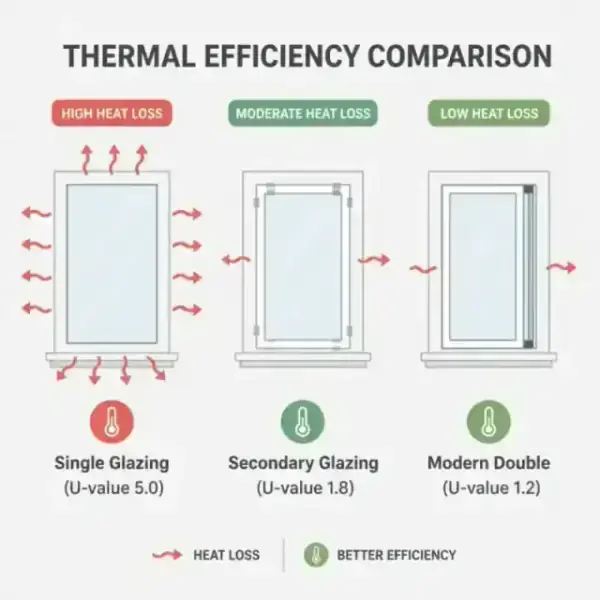
- Original Single Glazing: Usually has a U-value of around 5.0. It’s essentially a thermal hole in your wall.
- Modern Double Glazing: Typically hits 1.2 to 1.4. Very efficient, but often requires replacing the entire window frame, which is a big "no" from conservation officers.
- Secondary Glazing over Single Glazing: Can bring your U-value down to between 1.6 and 2.0.
While secondary glazing doesn’t quite match a brand-new triple-glazed window, it gets you remarkably close: and it does so without touching your original windows. For most planners, moving from a 5.0 to a 1.8 is considered a massive win for the environment and the building's longevity.
Why Planners Love Secondary Glazing
If you’ve ever dealt with a conservation officer, you know their favorite word is "reversible."
Secondary glazing for listed buildings is favored because it is a discrete, independent internal frame. It doesn’t damage the original fabric of the building. If a future owner 100 years from now wanted to remove it, they could do so in an afternoon, leaving the original 1880s sash window exactly as it was.
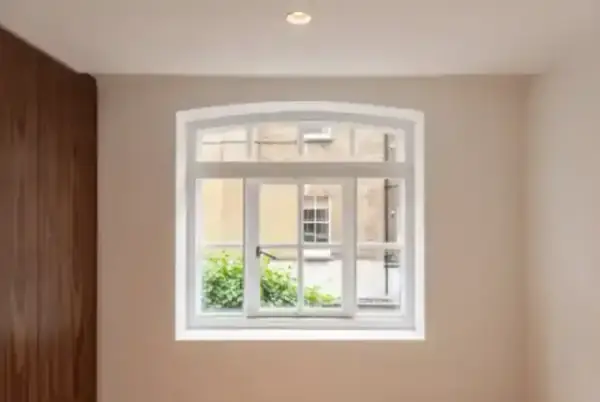
Because the unit sits on the inside, it’s virtually invisible from the street. This means you can maintain the "wavy" historic glass and the slim timber profiles that define your home's character while still enjoying a home that doesn't require the heating to be on 24/7.
More Than Just Heat: The Acoustic Bonus
While you might be looking into Grade II listed building secondary glazing for the thermal benefits, the "Aha!" moment for most of our clients happens the first time they close the new internal unit.
Because secondary glazing creates a significant air gap (usually 100mm to 150mm) between the two layers of glass, it is actually better at soundproofing than standard double glazing. We typically see a noise reduction of 70-80%. If you live near a busy London bus route or a train line, the silence is often more life-changing than the energy savings.
Choosing the Right Style for Your Windows
One of the biggest myths is that secondary glazing is clunky or hard to use. Modern systems are designed to mirror your existing windows perfectly.
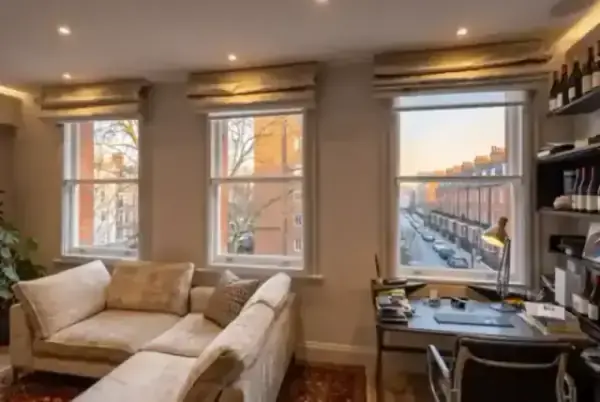
- Sash Window Secondary Glazing: We use vertical sliders that align exactly with your meeting rails. You won't even see the second frame from across the room.
- Hinged Units: Perfect for casement windows or where you need full access for cleaning.
- Bespoke Shapes: We frequently work with arched or circular windows, creating custom frames that follow the exact curve of your heritage architecture.
What Does Installation Look Like?
We know that "work on the house" usually sounds like "dust, noise, and weeks of disruption." One of the best things about this solution is how non-intrusive it is.
Since we aren't ripping out old frames or doing any structural work, most installations take just 1 or 2 days. There’s no scaffolding required, no need to move out, and we usually leave the room exactly as we found it: just a lot quieter and warmer.
Taking the Next Step
Meeting modern thermal standards in a period home doesn't have to mean compromising on history. By adding a high-performance internal layer, you're not just ticking a box for a Building Regs officer; you're making your home more comfortable, reducing your carbon footprint, and protecting the original features for the next generation.
If you’re unsure about what conservation area restrictions apply to you or which thermal glass would work best for your specific EPC goals, the best place to start is a professional survey. We can look at your specific window types and give you a clear picture of the thermal improvements you can expect.
Ready to see how your home could perform? Let's have a chat about how we can make your heritage property as warm as any modern build.