
Living with original windows in a listed building or conservation area often means balancing character with comfort. Historic sash windows, crown glass and timber joinery can be beautiful, but draughts, cold surfaces and street noise may make rooms harder to use.
Secondary glazing is an internal window fitted behind the existing one. It can improve comfort while keeping the original window in place. This guide explains how the approach works, what to consider for heritage windows, how thermal efficiency and noise reduction depend on specification, and which permissions and budget questions to check before you proceed.
What secondary glazing changes — and what it preserves
Secondary glazing is an independent frame and pane installed on the room side of the existing window, usually within the reveal or against the surrounding frame. It does not require the original sash or casement to be removed. That makes it a useful option when preserving original windows is an important part of the building’s character and significance.
The external appearance can often remain unchanged when the system is fitted internally, but the frame is still a real addition. Its sightlines, opening method, colour and position should be considered alongside the room, shutters, curtains and access for maintenance.
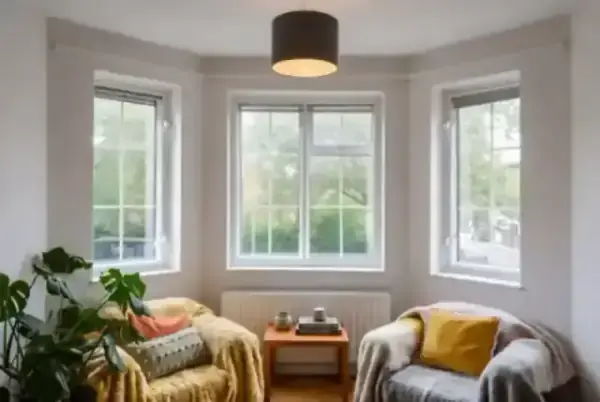
Choosing a system for heritage windows
The right configuration depends on the existing opening, reveal depth, ventilation needs and how often you use the window. A measured survey should establish these details rather than assuming one frame type will suit every room.
Vertical sliders for sash windows
Vertical sliding units are designed to work with the movement and proportions of sash windows. With careful placement, the secondary meeting rail and glazing bars can sit comfortably behind the originals while keeping access to the window practical. Our focused guide to secondary glazing for sash windows covers that decision in more detail.
Hinged and lift-out units
Hinged units may suit casements or openings where regular access for cleaning and ventilation matters. Lift-out panels can be considered for smaller or less frequently opened windows. The installer should explain how each option affects handles, shutters, curtains, cleaning and emergency access.
Thermal efficiency and acoustic comfort
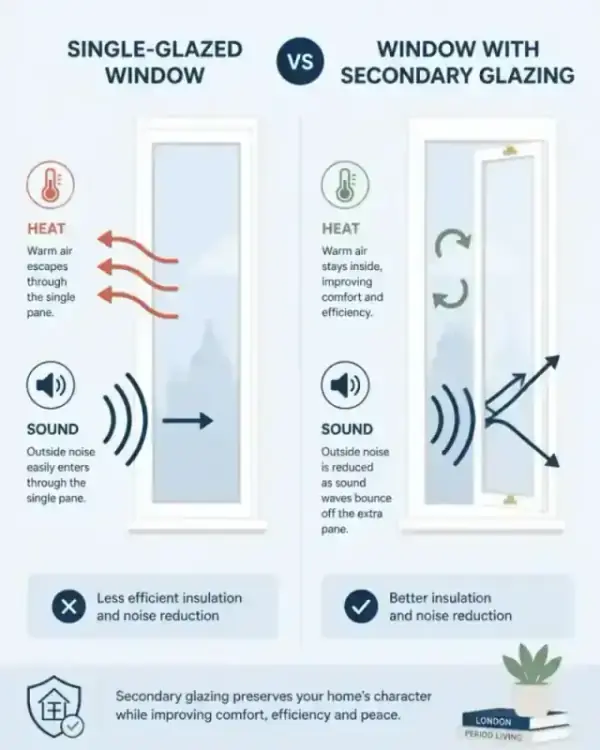
Secondary glazing can address heat loss and outside noise at the same time, but neither result is automatic. The outcome depends on the original window’s condition, the frame and glass specification, the air space, perimeter seals, installation quality and the construction of the room.
Thermal efficiency
An additional pane and a sealed air space can make the inner window surface warmer and reduce draughts. Low-emissivity glass may be appropriate where thermal performance is the priority. It is not a guarantee of a particular energy saving or bill reduction: heating patterns, ventilation, the rest of the building fabric and energy prices all affect the result.
Ask for the proposed glass and frame specification, and for any thermal assessment to be explained for your actual window. A survey can also identify whether the original sashes need repair or draught-proofing before a secondary frame is fitted.
Acoustic and noise reduction
Noise reduction is influenced by the independence of the two windows, the size of the air space, glass mass, acoustic laminate where appropriate, airtight seals and flanking paths through walls, floors and vents. A larger gap may help with some traffic noise, but the available reveal and the full construction set the practical limit.
There is no single percentage that applies to every home. For a closer look at glass choice, air spaces and acoustic assessment, read our guide to acoustic glass and noise reduction.
Listed buildings, Grade II homes and conservation areas
Planning permission and Listed Building Consent are different things. A listed building may need Listed Building Consent for works that affect its special architectural or historic interest, while a conservation area may have additional controls over external changes. The fact that a system is fitted internally does not create a universal exemption.
Secondary glazing may be viewed more favourably than removing or altering original windows because it can be reversible and leave the external elevation unchanged. However, the answer depends on the building, the proposed fixings, the significance of the window and the policy of the relevant authority. Grade II listed buildings still need a project-specific check.
Before ordering, send the proposed drawings, photographs and specification to your local planning or conservation authority and ask whether planning permission or Listed Building Consent is required. If you rent or live in a leasehold building, check with the landlord, freeholder or managing agent too.
For a broader overview of changes to a listed home, read our guide to home improvements in a listed building. Our guide to planning permission for windows in conservation areas explains how external controls and consent questions can differ.
For the specific consent questions, see our guide to Grade II listed buildings and secondary glazing permissions. If you live in a designated area, our guide to conservation-area window rules is the more focused follow-up.
Secondary glazing versus double glazing or replacement windows
There is no universal winner. Replacement windows can offer a new, integrated unit, but removing original timber, glass or joinery may be unacceptable or require consent in a heritage setting. Secondary glazing keeps the existing window and can be less disruptive, but it needs enough internal space and adds a second layer to operate and maintain.
Compare the options against the actual condition of your windows, the significance of the building, the desired noise reduction, thermal priorities, ventilation and the permissions position. Our narrower guide to secondary glazing versus double glazing for a period home goes deeper into that comparison.
Costs and budgeting
A meaningful quotation needs more than a price per window. Costs can vary with the number and size of openings, opening style, glass, finish, reveal depth, access, repairs, preparation, making good and aftercare. A conservation project may also involve professional advice or authority requirements.
Ask for a room-by-room specification that states what is included and separates repairs or optional upgrades. Treat any payback or energy-saving estimate as indicative rather than guaranteed, and base it on your property and usage. Our secondary glazing cost and budgeting guide covers the financial questions without pretending that one figure fits every home.
When to investigate the existing window first
Secondary glazing is not a substitute for repairing serious decay, loose masonry or unsafe joinery. Ask for the original window to be assessed before installation if you can see rot, failed putty, movement, water ingress or gaps around the opening.
Condensation can also have several causes. A warmer inner pane may reduce the risk on the room-facing surface, but ventilation, moisture levels, cold bridges and the condition of the original window still matter. A careful specification should consider fresh-air requirements and how both layers will be opened and maintained.
Questions to ask before you commission the work
- How will the proposed frame sit within each reveal, and what original details need protecting?
- Which opening style, glass and seals are recommended for this room, and why?
- What thermal and acoustic performance is realistic for these particular windows?
- How will the original sashes or casements be accessed for cleaning, ventilation and future repair?
- Does the quotation include surveys, preparation, installation, finishing, permissions advice and aftercare?
FAQs
Is secondary glazing suitable for listed buildings?
It can be suitable because it is an internal addition that may be reversible and can preserve original windows. Suitability and consent are property-specific, so confirm the proposal with your local planning or conservation authority before work begins.
Do Grade II listed buildings need permission for secondary glazing?
There is no blanket answer. The need for Listed Building Consent depends on the building and the detail of the installation, including fixings and any effect on historic fabric. Ask the relevant authority for a written, project-specific view where possible.
Will secondary glazing work with original sash windows?
Yes, vertical sliding systems are commonly considered for sash windows, while other openings may suit hinged or lift-out units. The frame needs to be measured around the existing sightlines, handles, shutters and available reveal.
Can it reduce traffic and other outside noise?
It can reduce noise when the frame, seals, glass and air space are specified for the sound source. Results vary, and noise can also travel through walls, roofs, floors and ventilation paths. A measured assessment is more useful than a guaranteed percentage.
Will it make my home more energy efficient?
It can improve the thermal performance of a window and make a room feel more comfortable, especially where draughts and cold glass are part of the problem. The effect on energy use depends on the whole property, the specification and how the heating and ventilation are operated.
Can the original windows stay in place?
That is one of the main reasons owners consider secondary glazing. The original windows can often remain, subject to their condition and the installation detail, so their character and historic fabric are retained.
A careful next step
Listed buildings reward a measured, reversible approach. The best solution will respect the original window, fit the room and set realistic expectations for warmth, quiet, maintenance and cost.
For advice shaped around your property, explore our secondary glazing services or request a quotation and measured survey. We can discuss your windows, the building constraints and the information your local authority may need.