
Georgian homes are admired for their symmetry, fine sash windows and carefully proportioned details. They can also be draughty, difficult to heat and vulnerable to intrusive street noise. This focused guide explains how secondary glazing for Georgian properties can improve comfort and thermal efficiency while keeping original windows in place.
The right result depends on the window, glass, seals, air gap, property and how the home is heated. Treat performance, cost and payback figures below as indicative estimates for planning a conversation with a specialist, not as guarantees.
Why Georgian windows need a careful approach
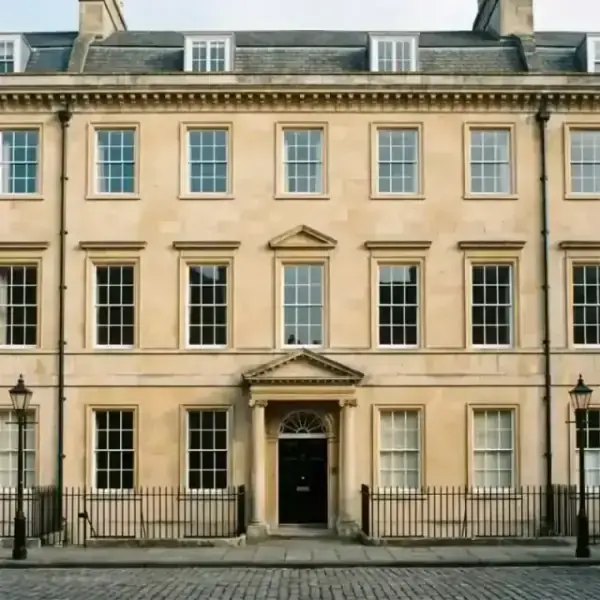
Georgian architecture spans 1714 to 1837 and includes everything from modest terraces to grand townhouses and country houses. Original windows may include 6-over-6, 8-over-8 or 12-over-12 sash arrangements, Venetian windows and delicate glazing bars. Those proportions, historic glass and joinery are part of the character that homeowners want to retain.
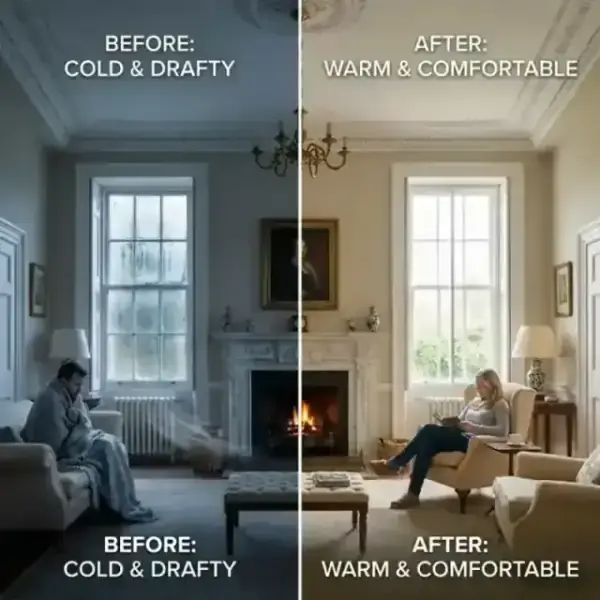
At the same time, many Georgian sash windows still use single glazing, aged putty or worn sash cords. Small gaps around the frame can admit cold air and noise, while the glass itself provides little insulation compared with modern standards. Some property assessments cite windows as accounting for up to around 40% of winter heat loss, but that is an indicative upper estimate rather than a universal figure. The actual proportion depends on the whole building envelope, window condition and heating behaviour.
Before specifying secondary glazing, inspect the sashes, meeting rails, parting beads, cords, putty, frame and surrounding reveal. The sash-window guide to keeping charm while losing draughts covers the repair and draught-proofing questions that sit alongside this Georgian-specific decision.
How secondary glazing works in a Georgian home
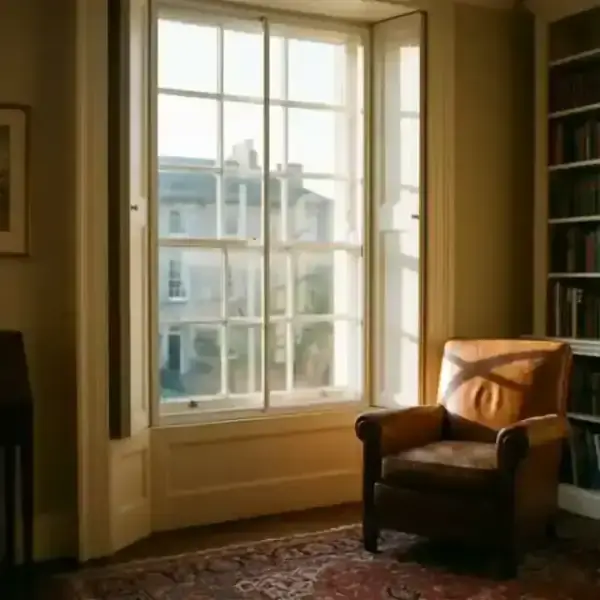
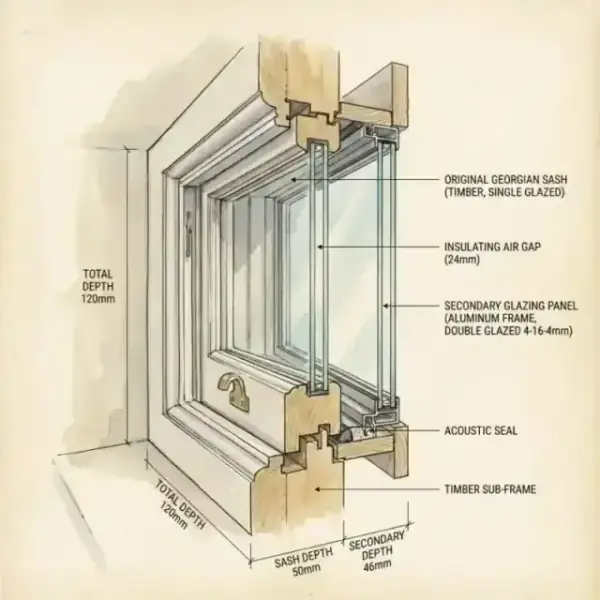
Secondary glazing adds a separate internal pane in front of the original window. The existing Georgian sash, wavy historic glass and external appearance stay in place, while the new frame, glass and seals create an additional thermal and acoustic layer.
Thermal efficiency and comfort
In a suitable installation, a well-sealed secondary system may reduce heat loss through the window by up to around 60%. This is an indicative estimate, not a promised result: the improvement varies with the original glass, frame condition, seals, air gap, room, property and energy use. Draught reduction can be just as important to comfort as the glass itself.
If you are planning several upgrades across a period home, use the complete period-property energy-efficiency guide for the wider sequence. This article stays focused on what is distinctive about Georgian windows.
Noise reduction
A suitably specified system with appropriate glass and an effective air gap may reduce external noise by up to around 45 decibels in some conditions. That is an indicative performance estimate, not a guarantee for every room. Traffic, aircraft and other low-frequency sounds can still travel through walls, vents, doors or adjoining windows, and the measured result may differ from how quiet a room feels.
For a Georgian property in a busy town or city, ask the installer what was measured, where it was measured and which glass, seals and air gap were used. The broader London period-property guide has wider context, but does not replace a survey of your windows.
Choosing a system for Georgian windows
Glass options
- Standard float glass: a clear, straightforward option for windows where everyday thermal improvement is the main priority.
- Laminated or acoustic glass: may suit street-facing rooms or properties where noise reduction matters, subject to the frame and reveal being suitable.
- Low-emissivity glass: may improve thermal performance while remaining visually discreet, but it should be specified as part of the complete system.
Opening styles and sightlines
Vertical sliders can echo the movement of original sash windows. Horizontal sliders, hinged panels, fixed units and lift-out systems may be better for different openings, access needs or seasonal use. The choice should account for cleaning, ventilation, handles, shutters, curtains and safe operation.
Ask for slim, colour-matched frames and carefully considered sightlines, but do not choose a nominal frame depth or air gap from a generic list. Uneven historic joinery and the available reveal determine what can be fitted without obscuring important Georgian details. For another way to think about retaining original windows while meeting modern expectations, see meeting modern thermal standards in a period home.
Listed buildings and conservation areas
Secondary glazing is often attractive for heritage windows because it is an internal, potentially reversible intervention. Historic England guidance generally favours reversible, non-destructive solutions where they protect historic fabric. The listed-building secondary glazing guide gives broader heritage context, but neither general guidance nor another project is an approval of this installation. Decisions are case-specific.
Listed building consent: general guidance
As general guidance only, assume that a Grade I building will require listed building consent for alterations; Grade II* buildings usually require consent; and Grade II buildings may require consent depending on the proposal. The consent decision is made case-by-case by the local planning authority, so check with that authority before ordering work. A reversible installation is not automatically exempt.
Conservation area checks
A Georgian home in a conservation area may need planning permission or other local approval, particularly where windows are prominent from public areas or local policy protects their appearance. The guide to planning permission for windows in conservation areas is a useful starting point, but your local planning authority has the final say.
Explain the proposed frame, fixing method, glass, ventilation and reversibility to the conservation or planning officer. Do not rely on another property’s consent, an installer’s assumption or a general statement that internal work is always permitted.
Building regulations, FENSA and installation
Depending on the work and the property, secondary glazing may require building regulations approval. FENSA registration or another competent-person route may be relevant to some window work, but it does not replace listed building consent or planning permission. Check the proposed work with your local authority building control and ask the installer what certification applies.
A sensible Georgian installation process
- Survey: record the window condition, reveal depth, glazing bars, opening pattern, access and likely noise or draught paths.
- Preparation: repair sash cords, putty, seals or frame defects where needed before the inner system is measured.
- Design: choose glass, frame finish, opening style, ventilation and fixings around the original details.
- Installation: use discrete, carefully documented fixings that avoid unnecessary damage and can be removed in the future where appropriate.
- Handover: test movement, seals and ventilation, explain cleaning and record maintenance requirements.
For a room-by-room view of surveying, fitting and handover, follow the secondary glazing installation process and timeline.
Three reported Georgian property examples
These figures are property-specific examples from the original article, not typical results or promises. The outcome in another Georgian home will depend on the window, glass, seals, air gap, building, heating behaviour, weather and energy prices.
London townhouse
A reported 1750s Bloomsbury townhouse used vertical sliding secondary glazing with 6.4mm laminated glass across 6-over-6 sash windows. The owners reported a 58% reduction in heating costs during the first winter and traffic noise changing from 68dB to 35dB in front-facing rooms. These are measurements from that property and period, not a guaranteed saving or acoustic target for another home. The case also demonstrates why listed building requirements must be checked locally rather than inferred from someone else’s project.
Bath terrace
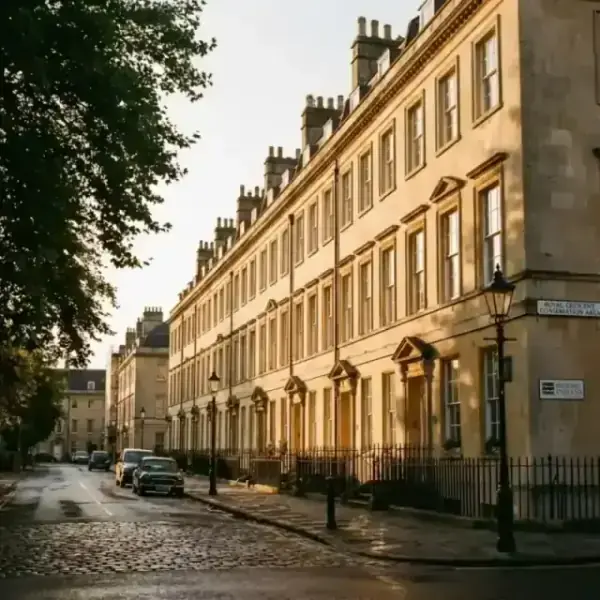
A reported mid-Georgian Bath terrace used low-E fixed units on less-used upper-floor windows and lift-out systems where access mattered. The owners reported a 45% improvement in thermal efficiency and a significant reduction in condensation; condensation typically resolves in most cases when the interior surface is warmer and moisture is managed, but ventilation, humidity, cold bridges and the original window still matter. No project-specific planning outcome should be treated as transferable.
Scottish country house
A reported early Georgian country house used lift-out secondary glazing for seasonal access. The owners reported a 65% reduction in winter heating costs and improved comfort during winter occupation. That is an example from a particular property and heating pattern, not a forecast for every Georgian house.
Cost and payback
Budgeting for Georgian secondary glazing is specification-led. Window size and complexity, opening style, glass, frame finish, access, repairs, installation method, property, installer and location can all change the quotation.
- Basic fixed systems: roughly £200–£350 per square metre as a typical indicative range for a straightforward specification.
- Sliding systems: roughly £350–£500 per square metre as a typical indicative range.
- Higher-specification systems: roughly £500–£750 per square metre as a typical indicative range where acoustic glass or complex mechanisms are involved.
- Complete Georgian house: £15,000–£25,000 may be an indicative range for a substantial project, but the actual quotation can vary considerably.
Use the 2026 UK cost and installation breakdown to understand the variables, then obtain a survey-based quotation. An estimated payback of 8–12 years may be possible in some properties, but it is not guaranteed: energy prices, occupancy, thermostat settings, heating system, starting condition and installation cost all affect it. For a benefits-focused explanation, see how secondary glazing can make a period home warmer.
Maintenance and expected service life
Clean the secondary panes with non-abrasive products, keep tracks and hinges clear, inspect seals and maintain the original sash windows behind them. Ventilation matters: a sealed inner layer can change how moisture behaves in the cavity, so follow the installer’s maintenance guidance and investigate persistent condensation rather than simply sealing more gaps.
A quality system may deliver more than 20 years of useful performance in the right conditions, but that is an estimate, not a guarantee. Materials, hardware, seals, maintenance, building movement and use all influence service life.
Questions to ask a Georgian secondary glazing specialist
- How will you protect the original sash, glazing bars and historic glass?
- Which glass, seals and air gap are proposed, and why do they suit this room?
- Which opening style will preserve access, ventilation and cleaning?
- What repairs or draught-proofing should happen before measurement?
- Could the work require listed building consent, planning permission or building regulations approval, and who will confirm that with the relevant authority?
- What is included in the quotation, what maintenance is expected and which claims are estimates rather than guarantees?
For a property-specific comparison, you can also read the Victorian flat case study, but remember that a Victorian flat has different windows, exposure and building conditions from a Georgian house.
FAQ: secondary glazing for Georgian homes
Will secondary glazing hide my Georgian sash windows?
It is designed to sit inside the original opening, so the external Georgian façade and original windows remain visible. The internal visual impact depends on the frame, reveal, glazing bars and opening style selected.
Does secondary glazing remove condensation?
It can significantly reduce condensation and typically resolves it in most cases on the warmer interior surface, but it cannot guarantee complete elimination. Humidity, ventilation, cold bridges, seals and the condition of the original window still need attention.
Will a listed Georgian property always need consent?
Not every proposal has the same outcome. Treat Grade I as requiring consent, Grade II* as usually requiring it and Grade II as potentially requiring it, then ask the local planning authority for a case-specific decision before work starts.
Is FENSA approval enough?
No. Depending on the work and property, building regulations approval may be required, and local building control should be consulted. FENSA or another certification route does not decide listed building consent or planning permission.
How much does Georgian secondary glazing cost?
The indicative ranges above are a starting point only. A survey-based quotation is needed because Georgian windows vary in size, condition, access, opening style and glass specification.
Take the next step
Secondary glazing can help a Georgian home become warmer, calmer and easier to live in while preserving the original windows that give it character. The best design is the one that responds to the specific opening, building and heritage constraints.
Ready to discuss your Georgian windows? Contact us for a considered survey and quotation.
At SecondaryDoubleGlazing, we help period-property owners understand their options without asking them to sacrifice the details that make their homes distinctive.